Unit 415 District 415 (Region 4)
A wild backcountry strip of Lewis & Clark National Forest between the Bob Marshall/Great Bear Wildernesses and Glacier — big-country elk, giant Front mule deer, mountain goats, and full grizzly country.
Rocky Mountain Front — Summit / North Fork Birch Creek — Region 4 · Last reviewed 2026-07-12
Area
206
sq mi
Public land
95%
approx.
Elevation
4,500–9,000
feet
Motorized
limited
access
Overview
HD 415 is a narrow, mostly public strip of Lewis & Clark National Forest along the northern Rocky Mountain Front, wedged between the Bob Marshall and Great Bear Wildernesses to the west and Glacier National Park to the north, bordering the Blackfeet Reservation on the east. This is rugged, wild horse-and-foot country — the Birch Creek and South Fork Two Medicine drainages, the Badger-Two Medicine — that produces mature bull elk and the trophy mule deer the Front is famous for, plus limited mountain goat and bighorn opportunity. Private land is less than 5% of the district; the real challenge is the terrain, the weather, and hunting hard in the middle of grizzly country.
Terrain
Steep Rocky Mountain Front peaks, reefs and hogbacks cut by the Birch Creek, South Fork Two Medicine and Badger Creek drainages, rising from foothill benches to the crest of the Continental Divide.
Cover: Aspen, Douglas-fir and lodgepole on the lower slopes and foothill benches, with dense north-slope timber, avalanche chutes, alpine parks and rock above; brushy creek bottoms and willow along the drainages.
Landmarks: Rocky Mountain Front / Continental Divide · Birch Creek / Swift Dam · South Fork Two Medicine River · Badger-Two Medicine · Marias Pass (US Highway 2) · Bob Marshall & Great Bear Wildernesses · Glacier National Park (north boundary)
Access
Overwhelmingly public — private land is under 5% of the district. Public access to the Lewis & Clark National Forest comes mainly from five trailheads: Birch Creek at Swift Dam, Little Badger via the Blackfeet Reservation, and three sites along US Highway 2 from East Glacier to Marias Pass; the South Fork Teton/Front roads provide additional access. Roughly half the area is reachable by ATV or motorcycle on existing trails, the rest is horse or foot only. Both day hunts and extended backcountry trips are common. Note the Blackfeet Reservation boundary on the east is separate tribal land requiring tribal permission.
Managers: USFS Helena-Lewis & Clark NF, Bob Marshall / Great Bear Wilderness (USFS), private ranch
Access points: Birch Creek trailhead at Swift Dam · Little Badger (access via Blackfeet Reservation) · US Highway 2 trailheads (East Glacier to Marias Pass) · South Fork Two Medicine / Front roads · backcountry trail network into the Front
Species notes
Rocky Mountain Elk
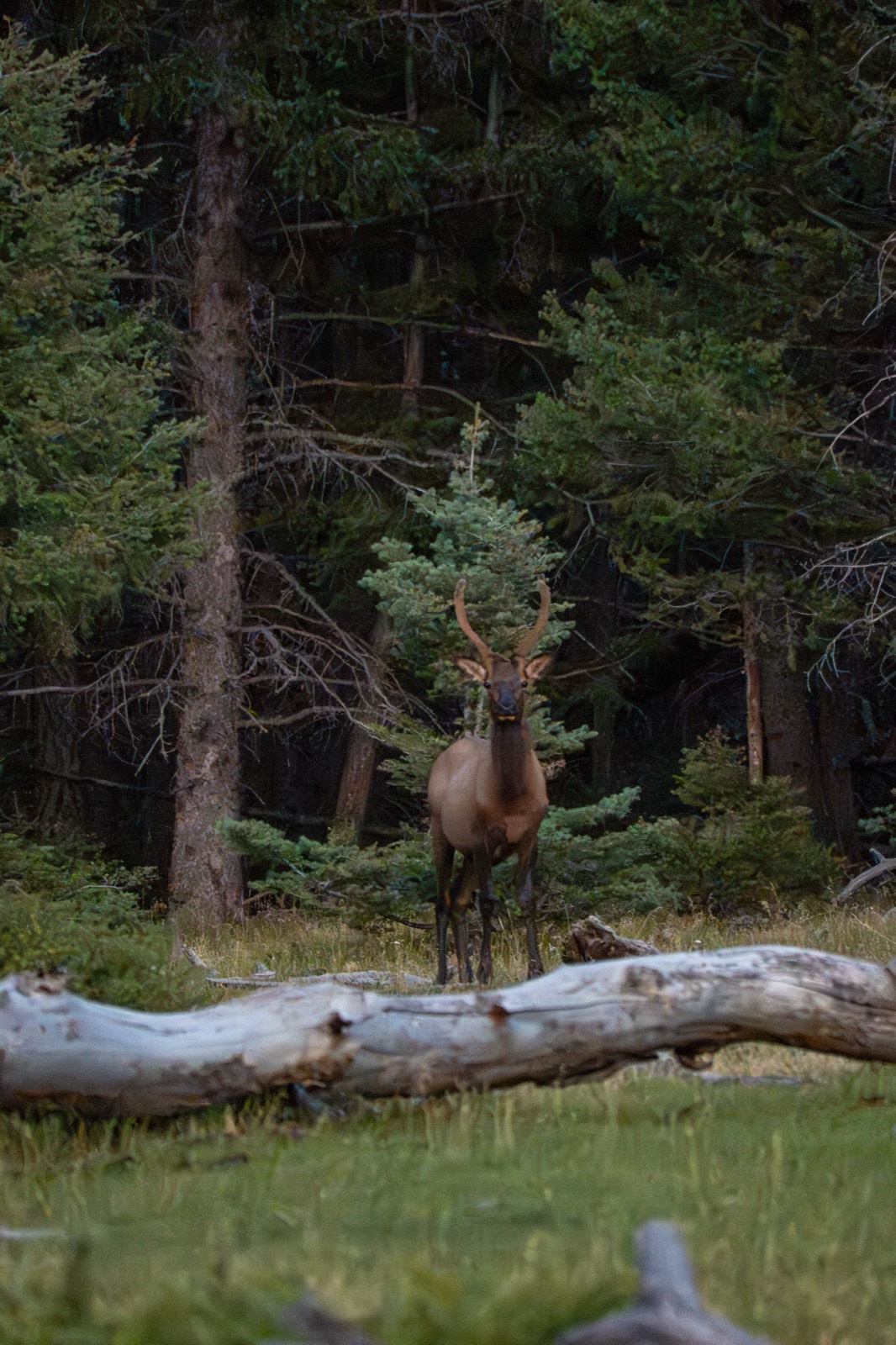
common qualityThe Front and its backcountry drainages hold a wild elk herd tied to the Bob Marshall complex and the Sun River winter range; bulls run to good age class in this rugged, lightly roaded country, though numbers were reported lower in a recent survey year.
- →Hunt deep — get past the trailhead crowds into the backcountry drainages by horse or foot
- →Glass avalanche chutes, timber-park edges and high basins at first and last light
- →Locate bugling bulls in the early season, then work the dark north-slope timber where they hold
- →Time later hunts to storms that push elk down off the high country and out of the wilderness onto the Front
Mule Deer
common trophyThe Rocky Mountain Front is renowned for producing giant mule deer, and HD 415's high basins, reefs and foothill benches grow the kind of mature bucks the region is famous for — a genuine trophy-quality opportunity for hunters willing to climb.
- →Glass high alpine basins, rockslides and reef faces for bedded bucks
- →Hunt the timberline transition and steep hogback country the big Front bucks favor
- →Push into the higher backcountry away from road access for the mature age class
- →The late rut brings big bucks into the open on the foothill benches
Whitetail Deer
limited opportunityWhitetails use the lower creek bottoms and aspen-and-willow riparian cover along Birch Creek and the foothill drainages, a secondary opportunity below the high country.
- →Hunt aspen and willow creek bottoms on the lower foothill benches
- →Time effort to the November rut in the riparian corridors
Mountain Goat
limited trophyThe high peaks and reefs of the Front support mountain goats, offered on a coveted limited-entry once-in-a-lifetime permit — a demanding alpine hunt for those who draw.
- →Apply for the limited-entry permit — this is a draw-only, once-in-a-lifetime tag
- →Glass cliff bands, reef faces and alpine ledges near the Divide
- →Be ready for technical, steep terrain and unpredictable Front weather
Bighorn Sheep
limited trophyRocky Mountain bighorns inhabit the escarpments and grassy faces of the Front near the district, a rare limited-draw trophy opportunity on classic Front sheep terrain.
- →Apply for the limited-draw sheep permit and scout the escarpment faces early
- →Glass grassy benches and reef faces where rams hold
- →Be prepared for extreme terrain and long spot-and-stalk approaches
Moose
limited qualityShiras moose use the willow bottoms, beaver drainages and wet timber along the backcountry creeks, available on a limited-entry permit for hunters who draw.
- →Apply for the limited-entry permit
- →Hunt willow creek bottoms and beaver-pond drainages at first and last light
- →Glass timbered draws and riparian meadows in the backcountry
Black Bear
common opportunityBlack bears are common on the timbered slopes and avalanche chutes of the Front, with spring green-up and fall berry crops drawing them onto huntable public ground — but this is core grizzly country, so bear identification is critical.
- →Glass green-up on south-facing slopes and avalanche chutes in spring
- →Check berry fields and mast in the drainages in fall
- →Be absolutely certain of black-vs-grizzly identification before any shot — grizzlies are present and protected
Cougar
limited opportunityMountain lions follow the deer and elk through the Front's timbered breaks and drainages; a winter tracking-snow pursuit in rugged, avalanche-prone country.
- →Cut tracks on the accessible Front roads and lower trails after fresh snow
- →Focus on deer-and-elk wintering slopes on the foothill benches
Pro tips
- →This is a fitness-and-backcountry hunt — get past the trailheads by horse or foot to reach mature elk and deer
- →The Front is famous for giant mule deer; invest in glassing the high basins and reef country
- →Carry bear spray at all times and know your black-vs-grizzly ID cold — this is core grizzly recovery country
- →Goat, sheep and moose here are limited-entry draws; build points and apply — they are not general tags
- →Time later rifle hunts to storms that push game down out of the wilderness onto the Front
- →Respect the Blackfeet Reservation boundary on the east — it is separate tribal land needing tribal permission
Watch out for
- !Core grizzly country (Badger-Two Medicine / NCDE) — carry bear spray, hunt in awareness, and identify bears with certainty before shooting a black bear; grizzlies are protected
- !Severe Rocky Mountain Front weather — early heavy snow, high wind and cold can strand hunters; plan escape routes and come prepared
- !Steep, avalanche-prone backcountry with limited motorized access — much is horse or foot only
- !The Blackfeet Reservation borders the district on the east; do not hunt tribal land without tribal permission
- !Remote with no full-service town inside the district — be fully self-sufficient
Logistics
This is remote backcountry — the nearest towns offer limited supplies. East Glacier sits at the north end near the US 2 trailheads; Choteau, Dupuyer and Bynum along the Front to the south have fuel, food and basic services. There is no full-service hub inside the district. Many hunters use outfitters and pack stock for extended backcountry trips, or day-hunt from the Swift Dam and US 2 trailheads. Come self-sufficient with backcountry and grizzly-country gear.
Nearest towns: East Glacier, Choteau, Dupuyer, Bynum, Browning
Seasons & regulations
This page carries no season dates or regulations. Get current rules from the official Montana sources:
Research sources: Deer Hunting in Montana's HD 415 - Summit/North Fork Birch Creek (HuntScore) · Region 4 Elk Season-Setting (Montana FWP) · Montana Expands Study of South Fork Elk Herds to Bob Marshall Wilderness (RMEF)
FAQ
- How big is Unit 415 in Montana?
- Unit 415 (District 415 (Region 4)) covers about 206 square miles, ranging from roughly 4,500 to 9,000 feet in elevation. Area is computed from the unit boundary polygon.
- How much public land is in Unit 415?
- Approximately 95% of the unit is public land. Primary managers: USFS Helena-Lewis & Clark NF, Bob Marshall / Great Bear Wilderness (USFS), private ranch. Always verify ownership boundaries on the ground.
- What species does the catalog list for Unit 415?
- Rocky Mountain Elk, Mule Deer, Whitetail Deer, Mountain Goat, Bighorn Sheep, Moose, Black Bear, Cougar. For seasons, tags, and regulations, use the official Montana agency resources linked on this page — this page carries no regulatory information.
Put Unit 415 on your map.
Boundary lines, public/private ownership, topo, and offline maps for this unit — in Baseline Maps, free for 14 days.