GMU 20 Makah Indian Reservation
The northwest tip of the Lower 48 — sovereign Makah tribal land, managed by the Tribe and closed to the general public's WDFW seasons.
WDFW Region 6 — Olympic Peninsula / Cape Flattery (Makah Reservation) · Last reviewed 2026-07-12
Area
41
sq mi
Public land
—
approx.
Elevation
0–1,700
feet
Motorized
limited
access
Overview
"GMU 20" corresponds to the Makah Indian Reservation, occupying the extreme northwest corner of the Olympic Peninsula around Neah Bay and Cape Flattery where the Strait of Juan de Fuca meets the Pacific. This is sovereign Makah tribal trust land, not part of Washington's general public-hunting system — the reservation is carved out of the surrounding WDFW GMUs (it forms the western boundary of GMU 601-Hoko), and hunting here is managed by the Makah Tribe for enrolled members exercising treaty and subsistence rights, not by state general seasons. The country holds Roosevelt elk, Columbian black-tailed deer, black bear and cougar in classic Olympic coastal rainforest, and the Tribe runs its own wildlife research and management (elk-calf and black-tail deer studies) to sustain these culturally central resources.
Terrain
Low coastal Olympic terrain: sea cliffs and headlands at Cape Flattery, wave-cut beaches, and a rolling forested interior of low ridges and river valleys rarely exceeding a couple thousand feet. Wet, mild and maritime year-round.
Cover: Dense temperate coastal rainforest — western hemlock, Sitka spruce, western redcedar and Douglas-fir with heavy salal, salmonberry, sword fern and devil's club understory — interspersed with regenerating timber cuts, muskeg, riverine wetlands and coastal shore-pine fringe.
Landmarks: Cape Flattery (northwesternmost point of the contiguous US) · Neah Bay (tribal seat) · Waatch River valley · Sooes (Tsoo-Yess) River valley · Makah Bay / Pacific shoreline · Hobuck Beach · Strait of Juan de Fuca (north shore)
Access
This is not open public-hunting ground. The Makah Reservation is sovereign tribal land and hunting on it is regulated by the Makah Tribe under its treaty-reserved and subsistence rights — deer and elk taken here feed families in Neah Bay and hold cultural and spiritual significance. Larger tribal reservations like the Makah are generally not encompassed by the WDFW GMU system, and a Washington state hunting license does not convey any right to hunt the reservation. Non-tribal visitors can buy a Makah Recreation Pass for beaches, the Cape Flattery Trail and other day-use, but that pass does not authorize hunting. Anyone seeking to hunt must deal directly with the Makah Tribe; treat the entire unit as closed to state-licensed public hunting.
Managers: Makah Tribe (reservation trust land)
Access points: SR-112 into Neah Bay (only road access; tribal land throughout) · Makah Recreation Pass required for non-tribal day-use of beaches/trails (not hunting)
Species notes
Roosevelt Elk
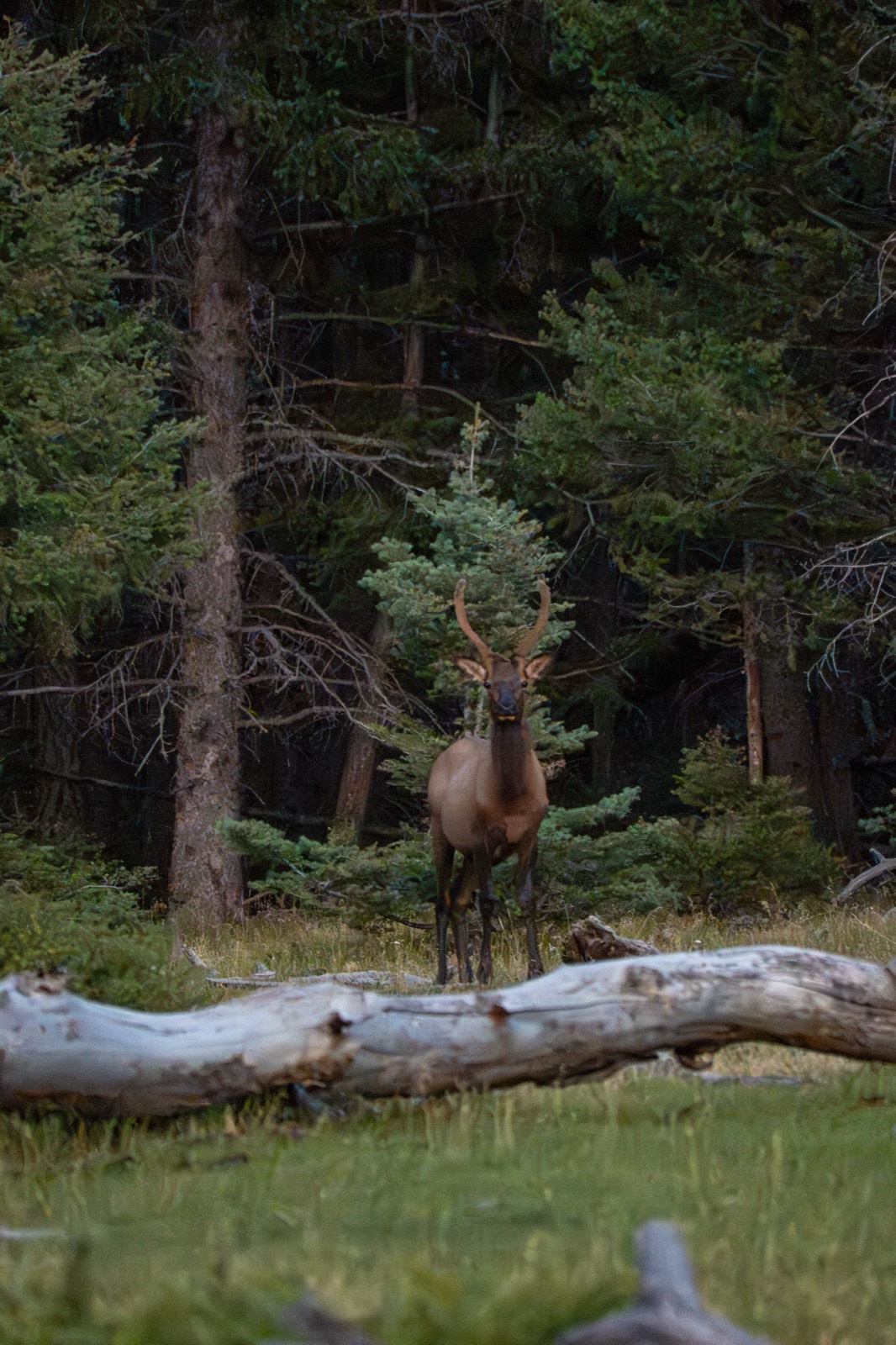
common qualityRoosevelt elk are established across the reservation's forest and river valleys and are a culturally central subsistence resource managed by the Makah Tribe, which radio-collars elk calves to track survival and herd composition. Hunting them is a tribal-member activity under Makah management, not a public opportunity.
- →Not a public hunt — elk here are managed and harvested by the Makah Tribe under treaty/subsistence rights.
- →Any interest in hunting must be arranged directly with the Makah Tribe; a state license does not apply.
Blacktail Deer
common opportunityColumbian black-tailed deer occupy the rainforest edges, regenerating cuts and river bottoms and are a staple subsistence species for the Makah, who conduct their own black-tail deer health and population studies. As with elk, harvest is tribally managed, not a state general-season opportunity.
- →Not a public hunt — black-tail here fall under Makah tribal management and member harvest.
- →Contact the Makah Tribe directly regarding any access; WDFW seasons do not govern the reservation.
Black Bear
common opportunityBlack bears are common throughout the dense Olympic coastal rainforest of the reservation. Any harvest is under Makah tribal management rather than WDFW seasons.
- →Not a public hunt — bear harvest on the reservation is tribally regulated.
Cougar
common opportunityCougars are present, following the elk and deer through the coastal forest. Management and any harvest fall to the Makah Tribe.
- →Not a public hunt — cougar on the reservation is under tribal jurisdiction.
Pro tips
- →Understand up front: this unit is the Makah Reservation — sovereign tribal land where a Washington hunting license grants no hunting privileges. Do not plan a state-season hunt here.
- →If you're a non-tribal visitor, the legitimate way to enjoy the area is the Makah Recreation Pass for Cape Flattery Trail, Hobuck/Shi Shi beaches and the Makah Museum — not hunting.
- →Any genuine hunting inquiry must go directly to the Makah Tribe's wildlife/natural resources program; respect that these elk and deer are a managed subsistence and cultural resource.
- →Adjacent public opportunity for elk/black-tail exists off-reservation in the surrounding WDFW units (e.g., 601-Hoko and the Olympic coast GMUs) — research those instead of the reservation.
- →Pack for relentless rain and fog; this is one of the wettest corners of the country.
Watch out for
- !The reservation is NOT open to state-licensed public hunting — hunting here without Makah authorization is trespass on sovereign tribal land and a violation of tribal law.
- !A Makah Recreation Pass covers day-use recreation only; it does not authorize hunting, camping restrictions apply, and passes must be displayed.
- !Respect tribal jurisdiction, closures and cultural sites throughout — much of the shoreline and interior is culturally sensitive.
- !SR-112 is the sole road in and is subject to slides and closures in storms; services in Neah Bay are limited.
- !Extreme coastal weather — rain, fog and Pacific storms year-round; plan accordingly.
Logistics
Neah Bay is the only town on the reservation, reached by SR-112 along the Strait — it offers fuel, a market, lodging, the Makah Museum and marina services. Clallam Bay and Sekiu just east add limited services, and Port Angeles (about two hours east) is the peninsula's full-service hub with the nearest larger airport. Weather is wet and mild year-round with some of the highest rainfall in the Lower 48; roads outside the SR-112 corridor are logging-grade. Remember that hunting access here is a tribal matter — the practical "logistics" for a non-member is that this is not a bookable public hunt.
Nearest towns: Neah Bay, Clallam Bay, Sekiu, Port Angeles
Seasons & regulations
This page carries no season dates or regulations. Get current rules from the official Washington sources:
Research sources: Makah Tribe — official site (Neah Bay, Cape Flattery, Recreation Pass) · Makah Reservation — Wikipedia · NW Indian Fisheries Commission — Makah elk & black-tailed deer research · WDFW Statewide Game Management Units map (2019-2020)
FAQ
- How big is GMU 20 in Washington?
- GMU 20 (Makah Indian Reservation) covers about 41 square miles, ranging from roughly 0 to 1,700 feet in elevation. Area is computed from the unit boundary polygon.
- What species does the catalog list for GMU 20?
- Roosevelt Elk, Blacktail Deer, Black Bear, Cougar. For seasons, tags, and regulations, use the official Washington agency resources linked on this page — this page carries no regulatory information.
Put GMU 20 on your map.
Boundary lines, public/private ownership, topo, and offline maps for this unit — in Baseline Maps, free for 14 days.