GMU 615 Clearwater
The west Olympic coast's top elk unit — District 16's #1 Roosevelt harvest, big bears, thin deer.
WDFW Region 6 — Olympic Peninsula (District 16, west end) · Last reviewed 2026-07-12
Area
320
sq mi
Public land
60%
approx.
Elevation
0–2,800
feet
Motorized
moderate
access
Overview
GMU 615 "Clearwater" is a ~320-square-mile, largely low-elevation coast unit on the far western Olympic Peninsula in WDFW District 16, draining the Clearwater and Salmon river systems toward the Pacific. It is a mix of DNR-managed state forest (a large block on the eastern side bordering Olympic National Park), Olympic National Forest, and private industrial timberland — recent ownership churn as Rayonier sold most of its District 16 ground to three new managers, plus non-motorized Ecotrust/Olympic Rainforest holdings. Since 2003 it has produced the most elk harvest of any District 16 GMU and is the district's best black bear unit, with a measured bear density among the highest sampled in the state. Blacktail deer, by contrast, are sparse across the whole west end of the district.
Terrain
Rolling, low-relief coastal timber country cut by the Clearwater and Salmon rivers, rising modestly toward the Olympic National Park boundary on the east side where a large DNR-managed block gains elevation. Most of the unit sits well under 1,500 ft; the wet Pacific slope keeps it green and thickly vegetated year-round.
Cover: Maritime Douglas-fir and western hemlock industrial forest with red alder river bottoms and a shifting patchwork of clearcuts and young replanted stands. Regen cuts fill with salmonberry, huckleberry, salal, blackberry, thimbleberry, elderberry, and serviceberry — prime elk forage and heavy bear feed. Cover is dense and low-visibility between the harvest openings.
Landmarks: Clearwater River · Salmon River · Olympic National Park boundary (east side) · Large DNR state-forest block bordering ONP · Queets River corridor (south) · US 101 (west corridor near Queets/Kalaloch) · Snahapish River drainage
Access
One of District 16's better public-access units: WDFW notes the west-end elk GMUs (615, 602, 607, 612) 'contain large areas of public land, much of it without restricted access,' including a large DNR block on the east side bordering Olympic National Park and Olympic National Forest ground. All these GMUs also include gated timber roads — some open to hunter access, others closed. Rayonier recently sold most of its District 16 holdings to three new managers who have not all published access plans, and this area has historically been non-motorized (walk-in / mountain-bike) only, including no e-bikes; scout and read the signage at each gate. Ecotrust/Olympic Rainforest LLC (holdings in 602/612/615) allows non-motorized public access on most properties. Note Olympic National Park land inside the unit is closed to all hunting.
Managers: WDNR (Olympic Region state forest), USFS Olympic National Forest, Ecotrust Forest Management (Olympic Rainforest LLC), Olympic National Park (east side — closed to hunting), Rayonier successor timber companies, Campbell Global
Access points: US 101 along the Pacific/Queets corridor (Queets, Kalaloch approaches) · Clearwater Road / Clearwater mainline from US 101 · DNR state-forest road network on the east side toward the ONP boundary · Gated timber-company mainlines opened seasonally (walk-in / non-motorized behind gates)
Species notes
Roosevelt Elk
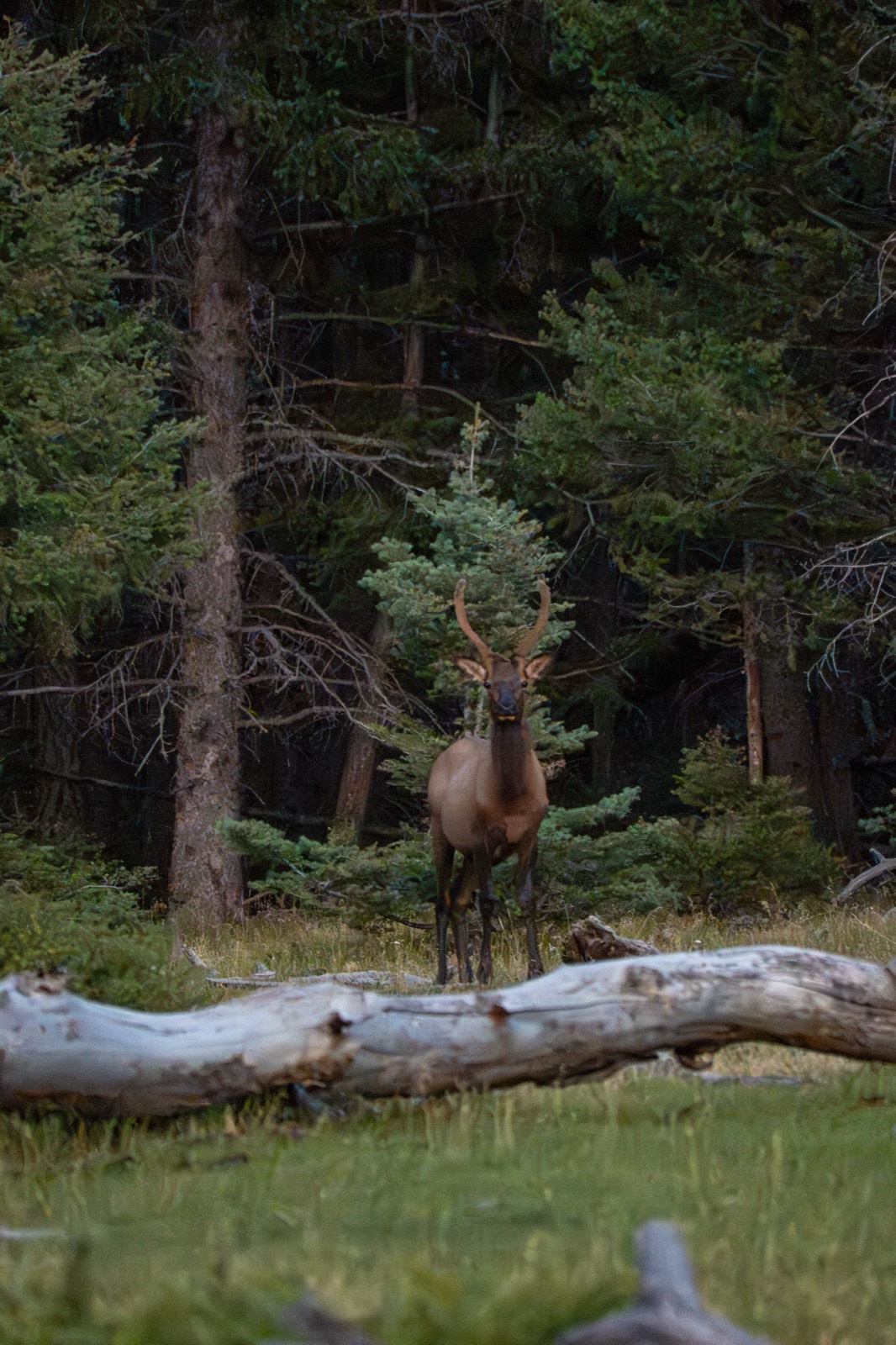
abundant qualityThe standout: Clearwater has had the most elk harvest of any District 16 GMU since 2003 (part of the Olympic elk herd). General-season bull harvest has swung from a low of 46 (2017) to a high of 102 (2020). It is the district's premier archery elk unit and, with adjacent Matheny (618) and Quinault Ridge (638), one of the GMUs WDFW points mature-bull hunters toward. Three-point-minimum bull country with heavy tribal harvest overlap.
- →Hunt elk as they filter out of Olympic National Park down the Clearwater and Salmon river drainages — public land and DNR/timber ground bordering the park are the best prospects.
- →Glass fresh clearcuts and 3- to 9-year regen units at first and last light for feeding herds, then still-hunt the timber edge as elk move to bed.
- →This is the district's top archery elk unit — plan the early season around cover, swamps, and creek bottoms during warm weather when bulls hold in closed-canopy timber by day.
- →Chase the September permit windows if you draw — that's when the biggest bulls are killed adjacent to the park.
- →Expect company and tribal hunters; scout hard pre-season to find herds away from the road-hunted mainlines.
Black Bear
abundant qualityDistrict 16's top black bear unit — the highest district bear harvest in 2024 (18 bears), and a WDFW density study estimated ~31 bears per 100 sq km here in 2022, one of the higher densities sampled in the state. Bears are common but seen infrequently in the thick coastal cover, so success is a scouting-and-patience game.
- →Glass clearcuts and regen units loaded with berry shrubs — salmonberry, huckleberry, blackberry, elderberry, salal — at dawn and dusk.
- →Hunt the open ground so you can spot a bear before it winds you; in dense cover the bear smells you first.
- →Find fresh sign (scat, torn-up bark, flipped logs) in a berry-rich cut, then sit it for long watches rather than covering ground.
- →Early fall, work higher-elevation huckleberry patches toward the ONP boundary as low berries fade.
Blacktail Deer
limited opportunityA distant third here. Deer are sparse across the whole west end of District 16, and Clearwater is one of the district's lowest buck-harvest GMUs (49 state bucks in 2024). Densities stay low; treat blacktails as an add-on to an elk or bear hunt rather than the objective.
- →Focus on the freshest regen cuts and alder/timber edges — the little deer here key on the same forage the elk and bear use.
- →Still-hunt slowly and glass openings at first/last light; the thick cover hides low numbers of secretive bucks.
- →Time your effort to the late-October/early-November rut, the best window to catch a mature blacktail moving.
- →Don't build a trip around deer in 615 — hunt it for elk and bear and take a buck opportunistically.
Cougar
common opportunityCougars are widespread; 615 sits in cougar hunt area CHMU 50 (with 607 and 618). Most cats are taken opportunistically by deer and elk hunters — a hunting team once took two adult males a few weeks apart within Clearwater. The area is harvest-cap managed and can close mid-season.
- →Carry the tag and treat cougar as a bonus while glassing cuts for elk and bear.
- →Hunt where deer and elk concentrate — cougars follow the prey.
- →After a fresh snow at the higher east end, cut roads and landings for tracks to follow up.
- →Watch the CHMU 50 harvest-cap status, since cap areas can close once the guideline is met.
Pro tips
- →Hunt 615 for what it's best at — Roosevelt elk and black bear. It's District 16's top elk-harvest GMU and its best bear unit.
- →Work the DNR block and Olympic National Forest ground on the east side bordering the park; that's where elk spill out of ONP and the best public access lives.
- →Assume non-motorized (walk-in / mountain-bike) behind timber gates and read each new owner's signage — Rayonier sold this ground and successors haven't all posted their rules.
- →Bears are dense but hidden — glass berry-rich cuts at first/last light and sit fresh sign rather than walking it out.
- →Don't count on deer here; the whole west district is thin. Take a blacktail opportunistically off an elk/bear hunt.
- →It is unlawful to hunt inside Olympic National Park — know exactly where the boundary runs on the east side.
Watch out for
- !Olympic National Park land inside the unit's east side is closed to all hunting — a common boundary trap.
- !Timber ownership recently changed (Rayonier sold most District 16 holdings to three managers); access rules vary by new owner and season, and much of it is non-motorized only, including no e-bikes.
- !Blacktail deer are genuinely sparse across the west end — don't plan a deer-only trip here.
- !No cell service in most of the Clearwater/Salmon drainages; preload maps and tell someone your plan.
- !Cougar hunt area CHMU 50 is harvest-cap managed and can close mid-season — check status.
- !Heavy tribal hunting overlaps state seasons on the Olympic Peninsula; expect shared pressure on the elk herds.
Logistics
Base out of Forks to the north (motels, fuel, groceries, the West End Sportsmen's Club) or the small communities of Queets/Amanda Park to the south along US 101; Aberdeen is the nearest larger service town well to the south. Access is off US 101 via the Clearwater Road/mainline and the DNR state-forest road network toward the Olympic National Park boundary. Expect gravel timber mainlines that may be gated to walk-in/non-motorized access, no cell service in much of the drainage, and steady Pacific rain — carry a current DNR ownership/road map (sold at Forks and Port Angeles) and preload offline maps.
Nearest towns: Forks, Queets, Amanda Park, Kalaloch
Seasons & regulations
This page carries no season dates or regulations. Get current rules from the official Washington sources:
Research sources: WDFW 2025 District 16 Hunting Prospects — GMU 615 elk (top district harvest), bear (18 harvested, density 31/100km2), deer (49 bucks, sparse west end), cougar CHMU 50, ownership/access · WDFW District 16 Hunting Prospects — private industrial forestlands access (Rayonier sale, Ecotrust/Olympic Rainforest non-motorized, gate rules) · GoHunt — Washington Unit 615 Clearwater unit profile · WDFW Game Management Units (GMU boundaries & maps)
FAQ
- How big is GMU 615 in Washington?
- GMU 615 (Clearwater) covers about 320 square miles, ranging from roughly 0 to 2,800 feet in elevation. Area is computed from the unit boundary polygon.
- How much public land is in GMU 615?
- Approximately 60% of the unit is public land. Primary managers: WDNR (Olympic Region state forest), USFS Olympic National Forest, Ecotrust Forest Management (Olympic Rainforest LLC), Olympic National Park (east side — closed to hunting), Rayonier successor timber companies, Campbell Global. Always verify ownership boundaries on the ground.
- What species does the catalog list for GMU 615?
- Roosevelt Elk, Black Bear, Blacktail Deer, Cougar. For seasons, tags, and regulations, use the official Washington agency resources linked on this page — this page carries no regulatory information.
Put GMU 615 on your map.
Boundary lines, public/private ownership, topo, and offline maps for this unit — in Baseline Maps, free for 14 days.