GMU 673 Williams Creek
District 17's #1 Roosevelt elk unit — the heart of the productive Willapa Hills herd, hidden behind Hancock non-motorized gates and FIA leases.
WDFW Region 6 — Coastal / Willapa Hills (District 17) · Last reviewed 2026-07-12
Area
263
sq mi
Public land
20%
approx.
Elevation
20–1,800
feet
Motorized
limited
access
Overview
GMU 673 "Williams Creek" lies in the Willapa Hills of Pacific County, draining the Williams Creek and Willapa River country inland of Raymond and South Bend. It is the top elk unit in District 17 — over the WDFW rank-sum window, 673 posted the district's highest total Roosevelt elk harvest (roughly 116 elk per year and the top harvest-per-square-mile) as the core of the exceptionally productive Willapa Hills herd. It is also a solid blacktail unit and a regular black bear producer. The land is a variable mix of private industrial timber — Hancock, Forest Investment Associates (FIA, which bought large ex-Rayonier blocks here), Hampton, and Campbell Global — plus large DNR tracts. WDFW rates motorized access as 'Poor,' with Hancock ground largely non-motorized, so this is a walk-in hunter's elk unit.
Terrain
Low coast-range Willapa Hills timber country draining toward Willapa Bay tidewater near Raymond and South Bend. From near sea level along the lower Willapa River, forested ridges and clearcut benches rise inland to roughly 1,800 ft. The Williams Creek and Willapa River drainages define the unit.
Cover: Intensely managed second- and third-growth Douglas-fir and western hemlock in a mosaic of clearcuts, replants, and older stands, with red alder bottoms along the creeks. Regenerating 3- to 9-year-old cuts carry the salmonberry, huckleberry, blackberry, elderberry, and salal that feed blacktail, elk, and bear.
Landmarks: Williams Creek · Willapa River · Willapa Bay tidewater (west, near Raymond/South Bend) · Hancock timberlands (non-motorized) · FIA (Forest Investment Associates) ex-Rayonier blocks · Large WDNR tracts
Access
WDFW rates GMU 673 motorized access as 'Poor' — most of the unit is closed to motorized use but open to non-motorized (walk-in) access, and the picture is highly variable by landowner. Primary private owners are Hancock, Forest Investment Associates (FIA), Hampton, and Campbell Global, plus large DNR tracts. Hancock ground (also in 658 and 681) is generally non-motorized only, but Hancock will open a few main logging roads during the general modern-firearm season to disperse hunters and allow some interior access. FIA — which purchased more than 30,000 acres of former Rayonier land in Pacific County (GMUs 673 and 658) and honors the existing Rayonier leases and permits — runs recreational lease and fee-access areas here. Campbell Global uses the colored 'dot' system posted at gates and typically opens some roads to motorized access as the season nears if fire danger is low. DNR tracts add public ground. Under the dot system red = no motorized, yellow = weekends only, green = open licensed vehicles; access is daylight-only. Archery and muzzleloader hunters often get less vehicle access than modern-firearm hunters.
Managers: Hancock, Forest Investment Associates (FIA), Hampton, Campbell Global, WDNR
Access points: US 101 / SR 6 corridor at Raymond-South Bend (west approach) · Williams Creek and Willapa River road networks (walk-in from gated mainlines) · Hancock main logging roads opened during modern-firearm season · Campbell Global dot-system gates · WDNR tracts
Species notes
Roosevelt Elk
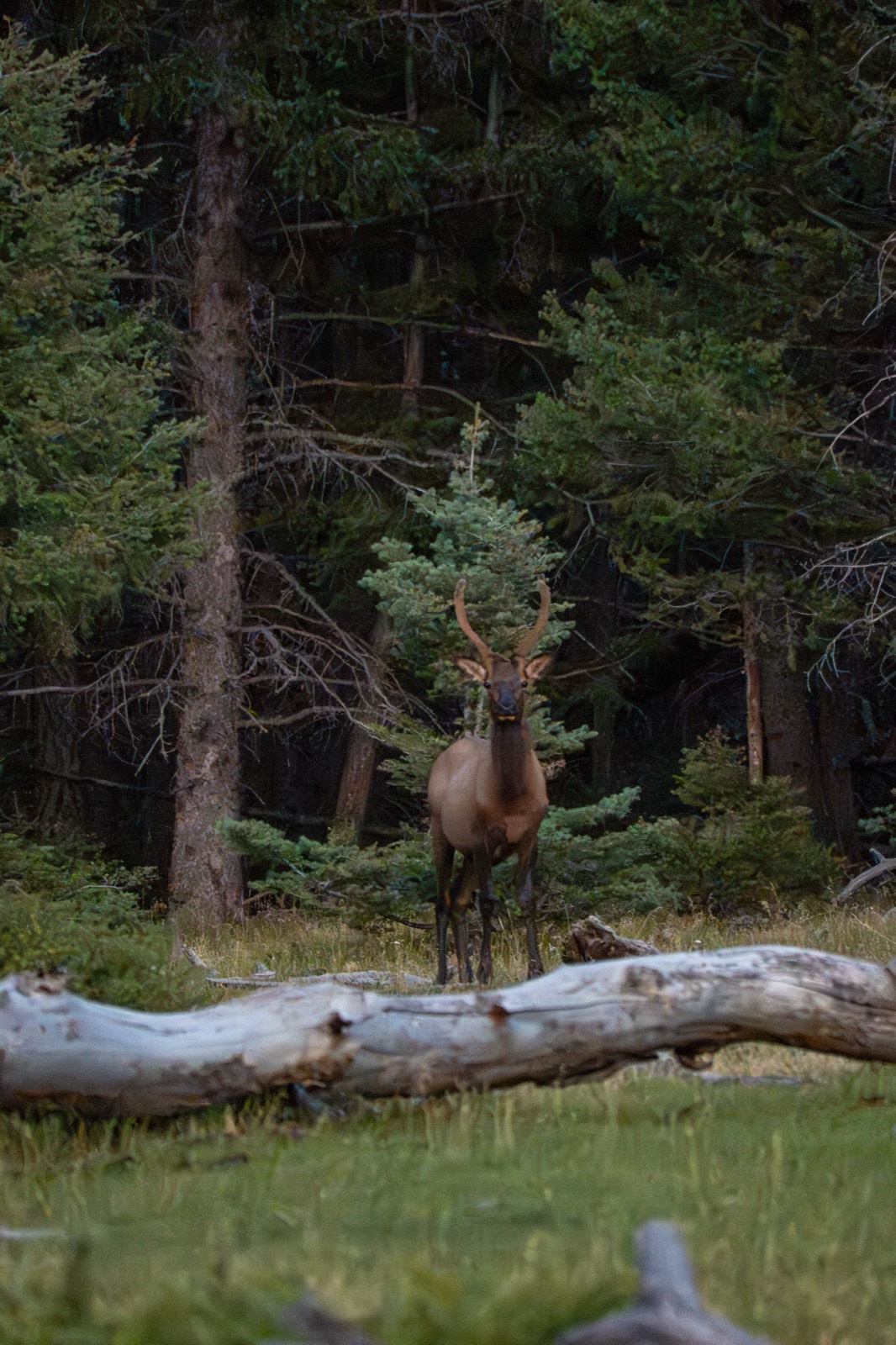
abundant qualityThe district's premier elk unit: GMU 673 posts the highest total Roosevelt elk harvest in District 17 (top of WDFW's rank order — roughly 116 elk/year in the survey window, and the highest harvest per square mile at about 0.44/mi²). It is the core of the Willapa Hills herd, whose calf-to-cow and bull-to-cow ratios are exceptionally robust. This is a genuine opportunity unit for a good elk — not a trophy-bull unit; WDFW sends mature-bull hunters to the Olympic (638/618) or St. Helens herds.
- →Plan to hunt on foot — Hancock ground is largely non-motorized, so hike in from gated mainlines to reach interior elk.
- →Time trips to the general modern-firearm season when Hancock opens a few main roads to disperse hunters and reach interior areas.
- →Glass clearcut edges at first and last light where elk forage; by day still-hunt closed-canopy timber, swamps, and regen stands adjacent to cuts.
- →Scout pre-season to find elk away from the road-hunted openings; the district's best elk density also draws its heaviest hunter density.
- →Consider an FIA lease/permit area or DNR tracts for a different slice of the herd if the Hancock ground is crowded.
Blacktail Deer
common qualityA solid blacktail unit within a strong deer district; 673 historically carried an any-buck bag during the general archery season, unlike most District 17 GMUs. Deer densities track the regenerating clearcuts, and the largely non-motorized access thins the deer-hunting crowd.
- →Key on 3- to 9-year-old clearcuts, which hold the highest deer densities for forage and cover.
- →Glass cuts and landings at first and last light, then still-hunt the timber/clearcut edge as deer move to bed.
- →Use the walk-in nature of the unit to your advantage — get off the few open roads to find undisturbed bucks.
- →Hunt the early-November rut for mature bucks; archery hunters historically enjoy an any-buck opportunity here.
Black Bear
common opportunityGMU 673 is a regular black bear producer in District 17 during general and spring-permit seasons. Bears are common in the Willapa Hills but seldom seen in the thick timber, so scouting sign and patient watching drive success.
- →Glass open clearcuts and regen units with berry shrubs — elderberry, salmonberry, huckleberry, blackberry, salal — at dawn and dusk.
- →Hunt the open ground so you can spot a bear before it scents you; in dense cover it smells you first.
- →Find fresh sign in a berry-rich cut, then sit it for extended watches rather than covering ground.
- →Work the walk-in Hancock and DNR ground where fewer hunters disturb feeding bears.
Cougar
common opportunityCougars are widespread through the Willapa Hills timber, following the district's abundant elk and deer. Most cats are taken opportunistically by big-game hunters, and WDFW manages cougar with harvest caps by PMU, so a unit can close mid-season.
- →Carry the tag as an add-on while glassing cuts for elk, deer, and bear.
- →Hunt where prey concentrates — regen stands and river bottoms — since cougars follow the elk and deer.
- →Check the cougar hunt-area status (1-866-364-4868) before and during your hunt in case the cap is met.
- →After fresh snow, cut roads and landings for tracks.
Pro tips
- →673 is District 17's #1 elk unit — the core of the productive Willapa Hills herd — but it's a walk-in hunter's unit; be ready to hike and pack out.
- →Time modern-firearm trips to when Hancock opens a few mainlines to disperse hunters and reach interior elk.
- →Sort the ownership before you go: Hancock (non-motorized), FIA (leases/fee, ex-Rayonier blocks), Hampton, Campbell Global (dot), and large DNR tracts all hunt differently.
- →Get off the few open roads for both elk and blacktail — the non-motorized access keeps pressured game patternable if you walk.
- →Archery deer hunters get an any-buck opportunity here historically — a real perk over neighboring GMUs.
- →Expect a good elk, not a giant — WDFW points trophy-bull hunters to the Olympic or St. Helens herds, not the Willapa Hills.
Watch out for
- !Motorized access is rated 'Poor' — most of the unit is walk-in only; plan your hike-in and pack-out before you commit to a bull.
- !Hancock ground is largely non-motorized and opens only a few mainlines during the general modern-firearm season.
- !FIA holds recreational lease and fee-access areas (ex-Rayonier blocks) and honors existing Rayonier leases/permits — verify status before hunting them.
- !Dot-system gate closures apply to all motorized vehicles including motorcycles, quads, and electric bikes; access is daylight-only.
- !The district's best elk density also draws its heaviest hunter density — scout for pockets off the open roads.
- !Trespass or ignoring posted signs/dot colors can bring prosecution and a permanent ban from the landowner.
Logistics
Base out of Raymond or South Bend on US 101 near Willapa Bay for fuel, lodging, and groceries; Menlo, Lebam, and Frances sit closer to the timber along the SR 6 / Willapa River corridor. Because access is largely non-motorized, plan to hike in from gated mainlines and pack game out — an e-bike is not a workaround (dot-system gate closures apply to all motorized vehicles, including electric). Carry a current ownership/access map to sort Hancock, FIA, Hampton, Campbell Global, and DNR ground, and time modern-firearm trips to when Hancock opens a few main roads. Developed public camping is limited; most hunters day-trip or camp on DNR ground where permitted.
Nearest towns: Raymond, South Bend, Menlo, Lebam, Frances
Seasons & regulations
This page carries no season dates or regulations. Get current rules from the official Washington sources:
Research sources: WDFW District 17 Hunting Prospects — GMU 673 Willapa Hills elk (district #1), deer, bear, access (Hancock non-motorized, FIA leases, Campbell Global dot, DNR) · WDFW 2024 District 17 Hunting Prospects (Pacific & Grays Harbor counties) · WDFW Game Management Units (GMU boundaries & maps)
FAQ
- How big is GMU 673 in Washington?
- GMU 673 (Williams Creek) covers about 263 square miles, ranging from roughly 20 to 1,800 feet in elevation. Area is computed from the unit boundary polygon.
- How much public land is in GMU 673?
- Approximately 20% of the unit is public land. Primary managers: Hancock, Forest Investment Associates (FIA), Hampton, Campbell Global, WDNR. Always verify ownership boundaries on the ground.
- What species does the catalog list for GMU 673?
- Roosevelt Elk, Blacktail Deer, Black Bear, Cougar. For seasons, tags, and regulations, use the official Washington agency resources linked on this page — this page carries no regulatory information.
Put GMU 673 on your map.
Boundary lines, public/private ownership, topo, and offline maps for this unit — in Baseline Maps, free for 14 days.