GMU 24 Quinault Indian Reservation
The Quinault Indian Reservation — sovereign tribal land on the Pacific coast, closed to state-licensed hunting and managed by the Quinault Indian Nation.
WDFW Region 6 — Coastal / Olympic Peninsula (Grays Harbor & Jefferson counties) · Last reviewed 2026-07-12
Area
328
sq mi
Public land
0%
approx.
Elevation
0–1,000
feet
Motorized
limited
access
Overview
GMU 24 corresponds to the Quinault Indian Reservation, a ~328 sq mi block of coastal temperate rainforest on the southwest Olympic Peninsula in northwestern Grays Harbor County and a sliver of southwestern Jefferson County. This is sovereign tribal land — more than 208,000 acres enclosing 23 miles of Pacific coastline and some of the most productive conifer forest in the country, drained by the Quinault and Queets rivers. Roosevelt elk, black-tailed deer and black bear are all native and culturally important here, but hunting on the reservation is managed by the Quinault Indian Nation's Wildlife Section for tribal subsistence — a Washington state deer or elk tag does NOT authorize hunting on this ground. State-licensed hunters after Olympic Peninsula Roosevelt elk or blacktail should hunt the surrounding public GMUs and coordinate with WDFW and the relevant land managers.
Terrain
Low-elevation coastal plain and rolling forested hills rising from 23 miles of Pacific beach and the Quinault and Queets river valleys inland into managed conifer forest. This is classic wet, low Olympic coastal country — sea level along the surf up to modest forested ridges.
Cover: Coastal temperate rainforest: western hemlock, Sitka spruce, western redcedar and Douglas-fir, much of it managed working forest, with dense salmonberry, sword fern and salal understory and productive riparian bottoms along the rivers.
Landmarks: Pacific coastline (23 miles) · Quinault River · Queets River · Lake Quinault (southern shore/Amanda Park area) · Taholah · Queets
Access
This is tribal land under Quinault Indian Nation jurisdiction, not open to state-licensed public hunting. The Nation's Wildlife Section manages Roosevelt elk, black-tailed deer and black bear for tribal subsistence and cultural use, reviews all forest-practice applications and timber sales on the reservation, and sets its own regulations and permits for tribal members. A WDFW license/tag confers no hunting privilege here. Non-tribal visitors come to the reservation for the beaches, the rivers (world-famous Quinault and Queets salmon and steelhead, fished under tribal authority), Lake Quinault and Taholah — not to hunt.
Managers: Quinault Indian Nation (sovereign reservation land)
Access points: SR-109 to Taholah (tribal community) · US-101 corridor along the reservation's east/south edge (Amanda Park / Lake Quinault) · Queets (US-101, north end)
Species notes
Roosevelt Elk
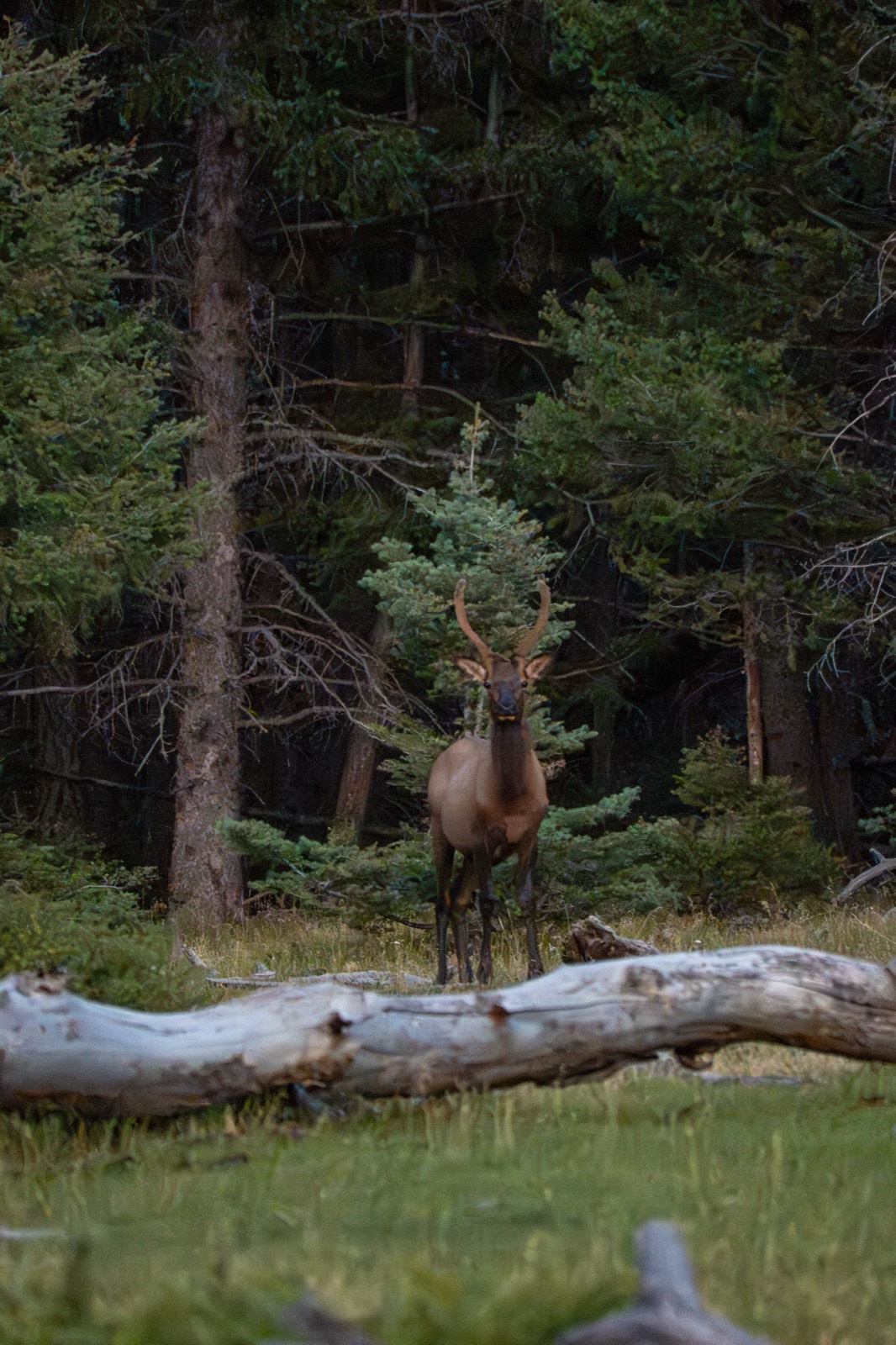
common opportunityRoosevelt elk are native to the Quinault region and culturally central to the Nation, which historically were skilled inland big-game hunters. Elk are managed by the Quinault Wildlife Section for tribal subsistence — there is no state-licensed elk hunting on the reservation. State hunters seeking Olympic Peninsula Roosevelt elk should look to the surrounding public GMUs.
- →Not open to state-licensed hunters — reservation elk are managed for tribal subsistence
- →Pursue Olympic Peninsula Roosevelt elk on adjacent public GMUs (USFS, WDNR and timber-company lands) instead
- →Non-tribal hunters must not hunt here regardless of a WDFW tag
Blacktail Deer
common opportunityColumbian black-tailed deer are native to the reservation's coastal rainforest and river bottoms and are traditionally hunted by the Quinault. As with elk, harvest is reserved to tribal members under Quinault Nation management; the unit is closed to state-licensed deer hunting.
- →Closed to state-licensed hunters — blacktail here are a tribal subsistence resource
- →State-licensed blacktail hunting is available on the surrounding public Olympic Peninsula GMUs
Black Bear
common opportunityBlack bears are native and common in the reservation's dense coastal forest and are culturally important to the Quinault. Bear management and any harvest fall under Quinault Indian Nation authority, not WDFW; the reservation is not open to state-licensed bear hunting.
- →Not open to state-licensed hunting — managed by the Quinault Nation
- →Pursue coastal black bear on adjacent public GMUs under a WDFW license instead
Pro tips
- →GMU 24 is the Quinault Indian Reservation — sovereign tribal land, closed to state-licensed hunting; a WDFW tag does not apply here
- →Hunting on the reservation is a tribal-member subsistence right managed by the Quinault Wildlife Section
- →For Olympic Peninsula Roosevelt elk or blacktail, hunt the surrounding public GMUs (USFS Olympic NF, WDNR, timber-company access programs)
- →Respect the boundary and the community — visitors come for beaches, rivers and Lake Quinault, and river/beach access may require tribal permits
- →Coordinate any Olympic Peninsula hunt with WDFW and the specific public land manager before you go
Watch out for
- !This is sovereign tribal land — hunting it under a state license is unlawful; know and respect the reservation boundary
- !Do not confuse the reservation with the adjacent Olympic National Park / Olympic National Forest, which have their own separate rules (the park is closed to hunting)
- !River and beach access, camping and fishing on the reservation are regulated by the Quinault Indian Nation and may require tribal permits/fees
- !Working timberland means active logging traffic, gates and closures on reservation roads
Logistics
Taholah (tribal seat) and Queets are the principal reservation communities, reached via SR-109 and US-101; Amanda Park and Lake Quinault sit at the southeast corner. Aberdeen/Hoquiam to the south and the US-101 loop provide the nearest full services, fuel and lodging. Note that access, camping and river use on the reservation are governed by the Quinault Indian Nation, and permits/fees may apply to visitors.
Nearest towns: Taholah, Queets, Amanda Park, Ocean Shores, Aberdeen
Seasons & regulations
This page carries no season dates or regulations. Get current rules from the official Washington sources:
Research sources: Quinault Indian Nation — Wildlife Section · Quinault Indian Nation — About Us · Quinault Indian Nation — Wikipedia · WDFW Game Management Units
FAQ
- How big is GMU 24 in Washington?
- GMU 24 (Quinault Indian Reservation) covers about 328 square miles, ranging from roughly 0 to 1,000 feet in elevation. Area is computed from the unit boundary polygon.
- How much public land is in GMU 24?
- Approximately 0% of the unit is public land. Primary managers: Quinault Indian Nation (sovereign reservation land). Always verify ownership boundaries on the ground.
- What species does the catalog list for GMU 24?
- Roosevelt Elk, Blacktail Deer, Black Bear. For seasons, tags, and regulations, use the official Washington agency resources linked on this page — this page carries no regulatory information.
Put GMU 24 on your map.
Boundary lines, public/private ownership, topo, and offline maps for this unit — in Baseline Maps, free for 14 days.