GMU 642 Copalis
Low coastal Rayonier timber above Copalis Beach: heavy-pressure blacktail and bear ground, District 17's top cougar producer, elk behind a Green Diamond permit.
WDFW Region 6 — Coastal Olympic Peninsula (District 17) · Last reviewed 2026-07-12
Area
277
sq mi
Public land
8%
approx.
Elevation
0–1,400
feet
Motorized
limited
access
Overview
GMU 642 "Copalis" is a ~277-square-mile, low-elevation coastal unit on the west side of the Olympic Peninsula in WDFW District 17, spreading inland from the Pacific around Copalis Beach and Ocean Shores across the Copalis and Humptulips river country. It is overwhelmingly private industrial timber — Rayonier is the primary landowner, with Green Diamond, Grays Harbor County, and Olympic Resource Management also holding ground — and WDFW rates its motorized access 'Poor.' The unit is part of the Olympic elk herd, but a Green Diamond access permit is required to hunt where most of the elk reside. Copalis sees heavy hunting pressure; it is a regular black-bear producer and, together with 648 and 651, accounts for most of District 17's cougar harvest.
Terrain
Low, rolling coast-range timber country close to the Pacific, cut by the Copalis and Humptulips river systems and their tributaries. Little real relief — a patchwork of clearcuts, young replants, and pockets of older second growth on the higher inland ridges, dropping to tidewater and coastal flats near Copalis Beach and Ocean Shores.
Cover: Douglas-fir, western hemlock, and Sitka spruce industrial forest interspersed with red alder bottoms; clearcuts and 3- to 9-year regen stands choked with salmonberry, salal, huckleberry, blackberry, elderberry, and cascara provide prime blacktail forage and bear feed. Dense, wet, low-visibility cover dominates between the harvest openings.
Landmarks: Copalis River · Humptulips River (south/east) · Copalis Beach / Pacific coast (west) · Ocean Shores (southwest) · Quinault Indian Reservation (northwest edge) · US 101 (east) · SR 109 coastal highway (west)
Access
WDFW rates GMU 642 motorized access as 'Poor' — most of the unit is closed to motorized use though it may be open to non-motorized (walk-in) access. The primary landowner is Rayonier, running its three-tier program: recreational lease, seasonal permit, and general (buy-a-permit) access. Green Diamond ground here is managed with the colored 'dot' system and is currently open to non-motorized public access, opening additional roads to vehicles as hunting season approaches if fire danger is low — but a Green Diamond access permit is required to hunt where most of the elk reside. Grays Harbor County and Olympic Resource Management also hold parcels. Dot colors: red = no motorized, yellow = weekends only, green = licensed vehicles on maintained roads, no dot = no motorized. Verify current policy with the WDFW Region 6 Montesano office (360-249-4628), Rayonier (360-533-7000), or Green Diamond (360-426-3381).
Managers: Rayonier, Green Diamond Resource Company, Grays Harbor County, Olympic Resource Management, Quinault Indian Nation (adjacent)
Access points: US 101 corridor (Humptulips) for eastern approaches · SR 109 coastal highway through Copalis Beach / Ocean City for western approaches · Rayonier gated mainlines under the lease/permit/dot system · Green Diamond walk-in roads (motorized as fire danger drops, permit for elk ground)
Species notes
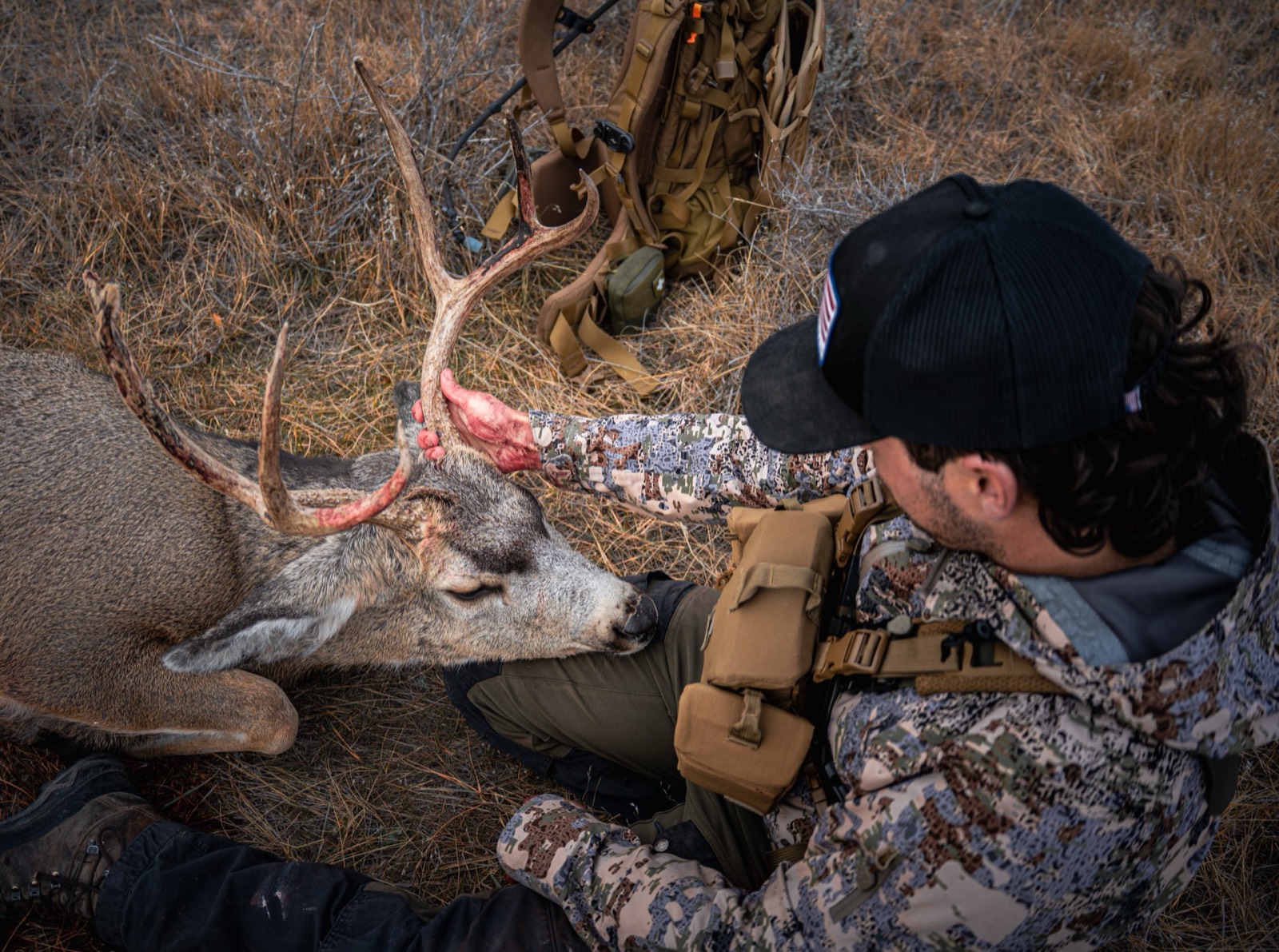
Blacktail Deer
common opportunityBlacktail are present throughout this coastal timber unit, though 642 is not among District 17's top-four deer producers (663, 648, 672, 660). The unit draws heavy hunting pressure. Highest densities follow 3- to 9-year-old timber harvests; deer are visible in cuts but visit them mostly at night, dawn, and dusk, holding cover during the day.
- →Hunt the 3- to 9-year regen cuts for the highest deer density, then still-hunt the adjacent cover through the day.
- →Glass openings at first and last light — deer expose themselves in cuts only at the margins of daylight.
- →Scout pockets away from the road-hunted mainlines; this is a high-pressure unit.
- →Time the rut — last week of October into early November — for the most buck movement.
- →Sort out Rayonier/Green Diamond access before the season so you can reach less-pressured interior cuts on foot.
Black Bear
common opportunityGMU 642 is a regular black-bear producer during the general fall season (WDFW lists it with 658, 660, 663, 673, 681). Bears are common but seldom seen in the thick coastal cover, so scouting is critical. Most are taken opportunistically during deer and elk seasons; district success runs roughly 4-8%, higher for dedicated bear hunters.
- →Glass open clearcuts and regen units with berry shrubs — salmonberry, huckleberry, blackberry, salal, elderberry, cascara — at dawn and dusk.
- →Hunt open terrain so you spot a bear before it winds you; in dense cover it smells you first.
- →Find fresh sign in a berry-rich cut, then sit it for extended watches rather than covering ground.
- →Work the berry feed early in the fall before deer and elk pressure scatters bears.
Cougar
common opportunityOne of District 17's best cougar units — most of the district's cougar harvest comes from 642, 648, and 651. Cats are taken mostly opportunistically by deer and elk hunters. The season is harvest-cap managed and can close mid-season once the removal cap is reached, so check the hotline before and during a hunt.
- →Carry a cougar tag as a real bonus here — 642 is among the district's top cougar producers.
- →Hunt where deer concentrate — regen stands and river bottoms — since cougars follow the prey.
- →Cut roads and landings for fresh tracks after any snow.
- →Check the cap-managed hunt-area status regularly, as it can close on short notice.
Roosevelt Elk
common opportunityPart of the Olympic elk herd (with 618, 638, 648). Elk are present, but a Green Diamond Resource Co. access permit is required to hunt where most of the elk reside — access, not elk numbers, is the limiting factor. This is not one of the district's premier mature-bull units (WDFW steers big-bull hunters to 638/618/615) nor a top Willapa harvest unit.
- →Buy the Green Diamond access permit if you intend to hunt elk — most of the unit's elk are on ground that requires it.
- →Glass timber-harvest edges, swamps, and creek/river bottoms near heavy cover during warm early weather.
- →Expect bulls to hold in closed-canopy timber by day and move to forage openings at first and last light.
- →Manage expectations — hunt 642 for its strong deer, bear, and cougar opportunity, with elk as a permit-gated add-on.
Pro tips
- →Sort out access first: Rayonier runs lease/seasonal/general-permit tiers, and a Green Diamond permit is required for most of the elk ground.
- →Hunt 642 for what it's best at — blacktail, black bear, and especially cougar, where it's a district leader.
- →Focus on 3- to 9-year regen cuts and glass them at first and last light; the cover is thick and deer are edge-of-daylight movers.
- →Get off the road-hunted mainlines on foot — this is a heavy-pressure, 'Poor'-motorized-access unit.
- →Learn the dot system and respect posted colors and gate hours on Rayonier and Green Diamond ground.
- →Confirm current company policy before the trip (Montesano 360-249-4628; Rayonier 360-533-7000; Green Diamond 360-426-3381).
Watch out for
- !Access is rated 'Poor' for motorized use — most of the unit is closed to vehicles though often open to walk-in; plan to hunt on foot.
- !Public-land fraction is very low; don't assume open ground without checking ownership.
- !A Green Diamond permit is required to hunt where most elk reside — elk without it is largely off-limits.
- !Rayonier lease and seasonal-permit areas are restricted to the holder; obey posted dot colors and signs.
- !The Quinault Indian Reservation borders the unit to the northwest — do not hunt tribal land without authorization.
- !Heavy hunting pressure, especially on the accessible mainline cuts.
- !Archery and muzzleloader hunters often get less (especially vehicle) access than modern-firearm hunters on timber ground.
- !Cougar season is cap-managed and can close mid-season — check the hotline.
Logistics
Base along the coast at Copalis Beach or Ocean Shores (SR 109), or from Hoquiam/Aberdeen on US 101 to the south, for lodging, fuel, and groceries. There is little public land in the unit, so developed camping is limited to coastal state parks and private campgrounds near the beach; the interior is gated private timberland where dispersed camping is not an open option. Carry a current ownership/access map, and arrange your Rayonier and Green Diamond permits before arriving — expect to drive or walk gravel mainlines that may be gated or dot-controlled.
Nearest towns: Copalis Beach, Ocean Shores, Humptulips, Hoquiam, Aberdeen
Seasons & regulations
This page carries no season dates or regulations. Get current rules from the official Washington sources:
Research sources: WDFW 2024 District 17 Hunting Prospects — GMU 642 access ('Poor', Rayonier tiers, Green Diamond dot/permit for elk), bear/cougar production, Olympic elk herd, deer · WDFW 2023 District 17 Hunting Prospects · GoHunt — Washington Unit 642 Copalis unit profile (land ownership, terrain, elevation) · WDFW Game Management Units (GMU boundaries & maps) · Olympic National Forest — Recreation (terrain, forest management)
FAQ
- How big is GMU 642 in Washington?
- GMU 642 (Copalis) covers about 277 square miles, ranging from roughly 0 to 1,400 feet in elevation. Area is computed from the unit boundary polygon.
- How much public land is in GMU 642?
- Approximately 8% of the unit is public land. Primary managers: Rayonier, Green Diamond Resource Company, Grays Harbor County, Olympic Resource Management, Quinault Indian Nation (adjacent). Always verify ownership boundaries on the ground.
- What species does the catalog list for GMU 642?
- Blacktail Deer, Black Bear, Cougar, Roosevelt Elk. For seasons, tags, and regulations, use the official Washington agency resources linked on this page — this page carries no regulatory information.
Put GMU 642 on your map.
Boundary lines, public/private ownership, topo, and offline maps for this unit — in Baseline Maps, free for 14 days.