GMU 651 Satsop
Green Diamond timber country south of the Olympics: one of District 15's few reliable elk units, popular blacktail, but access is pay-to-play.
WDFW Region 6 — Coastal / South Puget Sound (District 15) · Last reviewed 2026-07-12
Area
292
sq mi
Public land
2%
approx.
Elevation
0–1,000
feet
Motorized
limited
access
Overview
GMU 651 "Satsop" is a roughly 292-square-mile, low-elevation coast-range unit south of the Olympic Mountains in WDFW District 15 (with a portion falling into District 17), draining the Satsop River system toward Grays Harbor. It is overwhelmingly private industrial timberland — Green Diamond Resource Co. is the dominant owner, requiring a paid access permit for the large sections where most of the game lives — with only a thin public fraction anchored by the northeast corner of Capitol State Forest and scattered DNR/USFS parcels. Despite that access hurdle, 651 is a popular blacktail deer unit and one of only three District 15 GMUs (with 621 and 636) that offers reliable Roosevelt elk hunting, though elk numbers and bull harvest have been declining and treponeme-associated hoof disease (TAHD) is present in the herd.
Terrain
Rolling, low-relief coast-range timber country almost entirely under 1,500 ft: a working-forest patchwork of recent clearcuts, young replanted regen stands, and pockets of older Douglas-fir/western hemlock, cut by the Satsop River and its forks. There is no true high country here — the unit is a mosaic of harvest units on gentle-to-moderate timbered slopes.
Cover: Managed Douglas-fir and western hemlock industrial forest with red alder river bottoms; 3- to 10-year-old clearcuts and replants grow thick with salmonberry, salal, huckleberry, blackberry, and other browse — prime blacktail forage and bear feed. Mid-seral 20-40 year stands are the least productive for deer; younger cuts and riparian corridors hold the animals.
Landmarks: Satsop River and West Fork Satsop River (western boundary) · Twin Satsop area (Elk Area 6061) · Capitol State Forest (northeast corner) · US 101 and Road 8 (eastern/southern borders) · Matlock · Wynoochee and Chehalis river country to the west/south
Access
Access is the defining challenge: the unit is roughly 98% private and Green Diamond Resource Co. is the largest landowner, requiring hunters to purchase a Green Diamond access permit to hunt the large sections where most elk and much of the deer reside. WDFW's own advice for District 15 is blunt — if you want a general-season elk hunt here, you need 'the resources to buy a timberland access permit.' Green Diamond does offer walk-in opportunities on parts of its Mason-County ground, and the northeast corner of DNR's Capitol State Forest provides genuine public, Discover Pass access. Verify the current Green Diamond permit program (fee, motorized vs. walk-in, gate status) directly before the season, and expect tribal hunting pressure in the unit — tribal harvest routinely accounts for a large share of District 15 elk.
Managers: Green Diamond Resource Co., WDNR (Capitol State Forest, scattered state trust lands), USFS (small parcels), Private residential / small timber
Access points: US 101 corridor and Road 8 (east/south approaches) · Satsop / West Satsop river-valley road network · Capitol State Forest gates and roads (northeast corner, public) · Green Diamond gated mainlines opened under their permit/walk-in program · WDFW Region 6 office, Montesano (360-249-4628) for private-lands access questions
Species notes
Roosevelt Elk
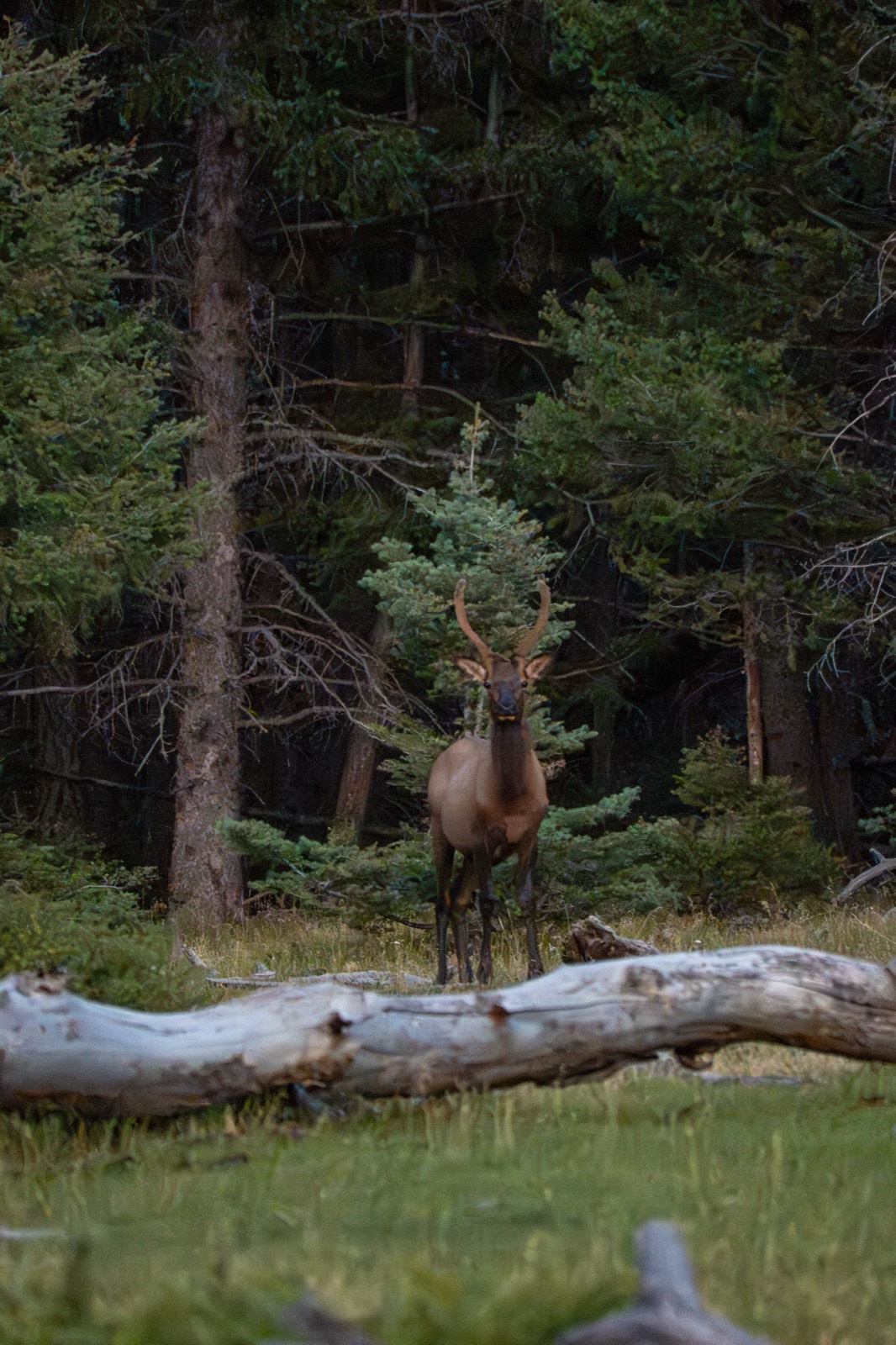
common opportunityOne of only three District 15 GMUs offering reliable Roosevelt elk hunting. GMU 651 is open to general-season elk for all weapon types as a three-point-minimum bull unit (antlerless legal in Elk Area 6061 for archers only). Quality is rated fair — within the target 12-25 bulls per 100 cows but below population objective, with bull harvest down the last three years. Five-year hunter success is modest: about 7% archery, 6% muzzleloader, 8% modern firearm. TAHD (hoof disease) is present, so limping elk turn up.
- →Buy the Green Diamond access permit early — most of the elk live on Green Diamond ground, and without the permit you are locked out of the best country.
- →Focus on the Satsop-drainage timber/clearcut edges and river bottoms where elk hold in cover by day and feed the openings at dawn and dusk.
- →Hunt the general early archery window if you want a shot at Elk Area 6061 antlerless opportunity around the Twin Satsop.
- →Expect company: general-season pressure plus significant tribal harvest means elk get bumped and educated quickly — get in ahead of the crowds.
- →Glass fresh regen cuts and confirm elk are present before committing; the herd is below objective and animals concentrate in pockets.
Blacktail Deer
common opportunityGMU 651 remains a popular blacktail unit with stable numbers — District 15's maritime climate rarely produces winter die-offs, so deer densities hold year to year. Columbian black-tailed deer is the only deer here. Portions owned by Green Diamond require the access permit, which both limits and disperses hunters. Mostly young bucks in the regen stands, with a mature buck earned out of thick cover.
- →Hunt 5- to 10-year-old clearcuts and their timbered edges — these young stands hold the highest deer densities and give you a chance to actually see deer.
- →Work riparian bottoms and older mature-forest pockets; avoid the dead 20-40 year mid-seral stands where forage and visibility collapse.
- →Glass cuts and landings at first and last light, then still-hunt the edge as deer move to bed.
- →Time your hardest effort to the late-October into early-November blacktail rut when bucks move most.
- →Use the Green Diamond permit requirement to your advantage — permitted ground sees fewer bodies than open public tracts.
Black Bear
common opportunityBlack bear occur throughout the unit as part of the Coastal Black Bear Management Unit (with 621 and 636). District 15 hunter success runs 7-11%, higher for those who specifically target bears rather than carry a tag incidentally. The long Aug. 1-Nov. 15 general season and two-bear limit give plenty of opportunity in the berry-rich cuts.
- →Glass open clearcuts and regen units full of ripe salmonberry, huckleberry, and blackberry at dawn and dusk in early fall, before deer/elk pressure scatters bears.
- →Hunt the open ground so you can spot a bear before it winds you in the thick coastal cover.
- →Find fresh sign on a berry feed, then sit it with patience rather than covering ground.
- →Carry the bear tag while deer or elk hunting — most 651 bears are taken opportunistically.
Cougar
common opportunityCougars occur throughout 651, which is grouped with 633 and 636 in a reorganized cougar hunt management unit carrying a harvest cap (8 independent-aged cougars for that group). Historically the old PMU 46 (642/648/651) was one of the few District 15 areas to periodically exceed guidelines, so cats are present. Most are taken incidentally by deer and elk hunters.
- →Treat cougar as an opportunistic add-on while glassing cuts for deer and bear — carry the tag.
- →Hunt where deer and elk concentrate; cougars follow the prey into the regen stands and river bottoms.
- →Call the WDFW cougar hotline (1-866-364-4868, updated Thursdays) before and during your hunt — the cap-managed area can close mid-season.
- →After a rare low-elevation snow, cut roads and landings for fresh tracks to follow.
Pro tips
- →Buy your Green Diamond access permit well before opening day — most of the elk and much of the deer are on their ground, and there's no plan B for the interior.
- →If you want District 15's most attainable general-season elk hunt, this is it — but manage expectations to 'fair,' with success under 10%.
- →Lean on the northeast Capitol State Forest corner for genuine public, permit-free ground when Green Diamond gates are closed.
- →Hunt young 5- to 10-year clearcuts for both deer and bear; skip the closed-canopy mid-age stands.
- →Expect and plan around tribal elk hunting pressure, which is a real factor in this unit.
- →Watch the cougar hotline — the cap-managed hunt area can close on you mid-season.
Watch out for
- !Roughly 98% private: a Green Diamond access permit is effectively mandatory to hunt the productive core — confirm the current program and gate rules before you go.
- !TAHD (treponeme-associated hoof disease) is present in the elk herd; report and expect limping animals.
- !Tribal hunting can account for a large share of District 15 elk harvest, raising real pressure beyond posted state-hunter numbers.
- !Bull harvest has declined three years running and the elk herd sits below population objective — this is a fair, not trophy, elk unit.
- !Industrial fire-danger closures can lock timber roads early in the season.
- !Trespass past a permit boundary or closed gate on company ground can mean prosecution and a permanent ban — obey posted signs.
Logistics
Base out of Montesano, Elma, McCleary, or Shelton along the US 12/US 101 corridor for motels, fuel, and groceries; Matlock is the closest hamlet to the interior timber. The unit is gated private Green Diamond timberland with a paid access program, so plan on securing your permit before arrival and carrying a current ownership/access map — dispersed camping on company ground is not an open option. The public northeast corner of Capitol State Forest (Discover Pass) is the most reliable camp-and-hunt base. Expect to drive gravel mainlines that may be gated or seasonally closed.
Nearest towns: Montesano, McCleary, Matlock, Elma, Shelton
Seasons & regulations
This page carries no season dates or regulations. Get current rules from the official Washington sources:
Research sources: WDFW 2025 District 15 Hunting Prospects — GMU 651 Satsop elk (Green Diamond permit, Elk Area 6061, TAHD, success rates), deer, bear (Coastal BBMU), cougar (CHMU 53) · WDFW 2023 District 15 Hunting Prospects · GoHunt — Washington Unit 651 Satsop profile (elevation, ~98% private / Green Diamond, boundaries) · WDFW Game Management Units (GMU boundaries & maps)
FAQ
- How big is GMU 651 in Washington?
- GMU 651 (Satsop) covers about 292 square miles, ranging from roughly 0 to 1,000 feet in elevation. Area is computed from the unit boundary polygon.
- How much public land is in GMU 651?
- Approximately 2% of the unit is public land. Primary managers: Green Diamond Resource Co., WDNR (Capitol State Forest, scattered state trust lands), USFS (small parcels), Private residential / small timber. Always verify ownership boundaries on the ground.
- What species does the catalog list for GMU 651?
- Roosevelt Elk, Blacktail Deer, Black Bear, Cougar. For seasons, tags, and regulations, use the official Washington agency resources linked on this page — this page carries no regulatory information.
Put GMU 651 on your map.
Boundary lines, public/private ownership, topo, and offline maps for this unit — in Baseline Maps, free for 14 days.