GMU 648 Wynoochee
Coast-range industrial timber on the south Olympic Peninsula: heavy blacktail and bear, tough access.
Region 6 — Olympic Peninsula · Last reviewed 2026-06-03
Area
431
sq mi
Public land
4%
approx.
Elevation
0–1,600
feet
Motorized
limited
access
Overview
GMU 648 "Wynoochee" is a 430-square-mile, low-elevation coast-range unit in WDFW District 17 on the southern Olympic Peninsula, draining the Wynoochee and West Fork Satsop rivers south toward Grays Harbor. It is overwhelmingly private industrial forestland — Weyerhaeuser, Rayonier, Green Diamond, Campbell Global, Fruit Growers, and Grays Harbor County — with only a thin sliver of public land (Olympic National Forest near Wynoochee Lake at the north edge, plus small state/county parcels). Despite a WDFW "Poor" access rating and busy hunter traffic, it is one of District 17's strongest blacktail deer units and the district's single best black bear producer. Elk pass through (part of the Olympic herd) but there is no reliable resident herd to hunt.
Terrain
Rolling, low-relief coast-range timber country: a patchwork of recent clearcuts, young replanted stands, and pockets of older Douglas-fir/western hemlock on steeper north-end slopes, all cut by the Wynoochee and Satsop river systems. Most of the unit sits well under 1,500 ft; only the far north near Wynoochee Lake and the Olympic National Forest boundary gains real elevation.
Cover: Douglas-fir and western hemlock industrial forest interspersed with red alder bottoms; clearcuts and 3- to 9-year regen stands choked with salmonberry, salal, huckleberry, blackberry, elderberry, and cascara — prime blacktail forage and bear feed. Dense, low-visibility cover dominates between the harvest openings.
Landmarks: Wynoochee River · Wynoochee Lake / Wynoochee Dam (north edge) · West Fork Satsop River (east boundary) · Satsop River (south/east boundary) · Hoquiam River (west boundary) · Olympic National Forest (north) · US 12 (south boundary) · US 101 (west/south boundary near Aberdeen) · Hoquiam and Aberdeen municipal watersheds (closed)
Access
WDFW rates GMU 648 access as 'Poor.' The unit is almost entirely private industrial timber; the Hoquiam and Aberdeen municipal watersheds are closed to the public, and only a small Olympic National Forest pocket near Wynoochee Lake plus scattered state/county parcels are truly public. Several timber companies use the colored 'dot' permit system posted at gates (Rayonier, Weyerhaeuser, Green Diamond, Campbell Global). Multiple companies are shifting historically free access to fee/permit programs — buy or arrange access early and verify the current policy directly with each landowner. Green Diamond is non-motorized walk-in but opens more roads as fire danger drops; Weyerhaeuser and Rayonier run tiered permit/lease access (Rayonier has a few signed lease areas, with most Rayonier ground in this GMU under their general access program); several landowners have a cooperative road-management agreement with WDFW. Archery and muzzleloader hunters often get less (especially vehicle) access than modern-firearm hunters.
Managers: Weyerhaeuser, Rayonier, Green Diamond Resource, Campbell Global, Fruit Growers Supply, Grays Harbor County, Olympic National Forest (USFS)
Access points: US 101 / US 12 corridor through Aberdeen-Montesano (south and west approaches) · Wynoochee Valley Road north toward Wynoochee Lake and Olympic National Forest · West Satsop / Middle Satsop road network (east side) · Gated timber-company mainlines opened seasonally under dot-system permits
Species notes
Blacktail Deer
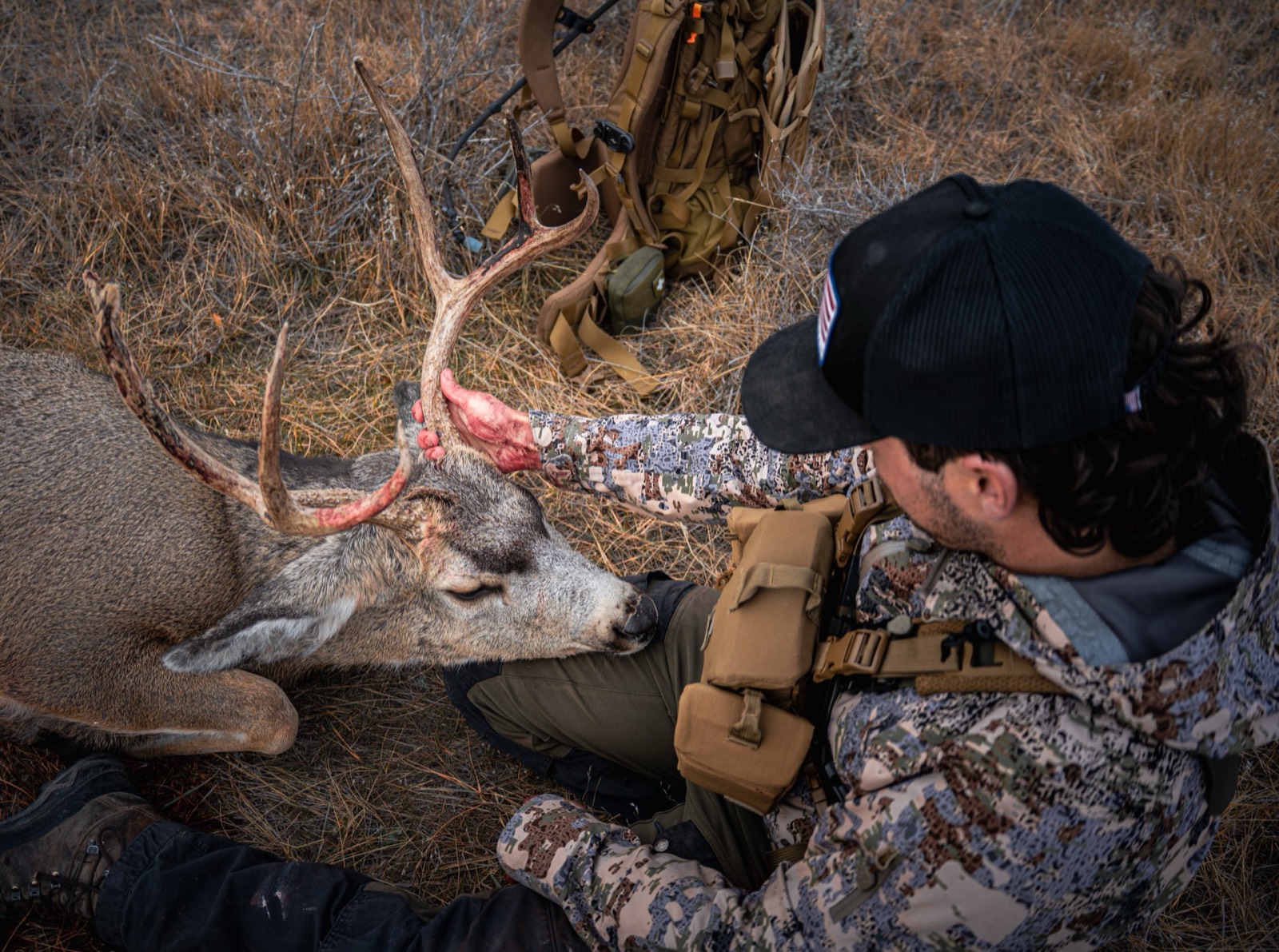
abundant qualityOne of District 17's top blacktail units — WDFW lists the best opportunities to harvest a black-tailed deer in the district as GMUs 663, 648, 672, and 660, and 648 ranks among the highest-harvest GMUs overall. Lots of deer, but lots of hunters too. Mostly young bucks; a mature 4-point lives in the brush but is hard-won.
- →Hunt the edges and interiors of 3- to 9-year-old clearcuts and replants — these regen stands hold the highest deer densities for both food and cover.
- →Glass cut units at first and last light from across-canyon landings, then still-hunt the timber/clearcut edge once deer move to bed.
- →Time your hardest effort to the rut: late October into early November is when bucks move most and drop their guard.
- →Rattling and grunting can pull bucks during the rut — a less common but effective tactic on pressured blacktails.
- →Scout pre-season to find pockets of deer away from the road-hunting crowds; high deer numbers draw high hunter numbers here.
Black Bear
abundant qualityWDFW reports more black bears are typically harvested during the general season in GMU 648 than any other GMU in District 17 — the district's standout bear unit. Bears are common but rarely seen in the thick coastal cover, so success leans heavily on scouting and patience.
- →Glass open clearcuts and regen units containing berry shrubs — salmonberry, huckleberry, blackberry, elderberry, salal, and cascara — at dawn and dusk.
- →Hunt the open ground so you can spot a bear before it scents you; in dense cover a bear smells you first and slips off.
- →Find fresh sign in a berry-rich cut, then sit it for extended watches rather than covering ground — patient stand-watching beats walking here.
- →Target bears on ripe berry feed in the early fall, before deer and elk pressure scatters them; confirm current season dates in the regulations.
Cougar
common opportunityCougars occur throughout the unit; 648 (grouped with 642 and 651) accounts for much of District 17's cougar harvest. Most are taken opportunistically by deer and elk hunters. The season is harvest-cap managed and can close mid-season, so check current status before and during your hunt.
- →Treat cougar as an opportunistic add-on while glassing clearcuts for deer and bear — carry the tag and be ready.
- →Hunt where deer concentrate (regen stands, river bottoms); cougars follow the prey.
- →Check the cougar hunt-area status regularly, since cap-managed areas can close once the removal threshold is reached.
- →After fresh snow at the north/higher end, cut roads and landings for tracks to follow up.
Roosevelt Elk
transient lowGMU 648 is part of the Olympic elk herd, but unlike the Willapa-herd units to the south (658, 672, 673, 681) it offers no reliable elk hunting — elk move through the Wynoochee drainage and visit forage areas occasionally rather than holding as a huntable resident herd. Manage expectations: this is a deer-and-bear unit first.
- →Scout hard and early; predicting elk here is difficult and gets worse once pressure builds.
- →Check timber harvests near cover, swamps, creek and river bottoms during warm early seasons — but expect bulls to stay in closed-canopy timber by day.
- →Look along the Wynoochee River corridor and forage edges where elk occasionally drift down from the north.
- →Realistically plan elk as a low-odds opportunity and lean on the unit's strong deer and bear hunting instead.
Pro tips
- →Buy or arrange your timber-company access (dot-system permits, Weyerhaeuser/Rayonier programs) before the season — companies are moving from free to fee access and gates can be locked.
- →Hunt 648 for what it's best at: blacktail deer and black bear. It's the district's top general-season bear unit and a top-tier deer unit.
- →Focus on 3- to 9-year-old clearcuts — the regen stands hold the most deer and the berry-shrub feed bears key on.
- →Glass cuts and landings at first/last light, then still-hunt the timber edge; the deer are there but the cover is thick.
- →Stay off the obvious road-hunted cuts — high deer numbers pull crowds, so scout pockets away from open mainlines.
- →Carry a cougar tag and watch the hunt-area status; opportunistic cats are a real bonus while you're glassing for deer and bear.
Watch out for
- !Access is rated 'Poor' — most of the unit is private industrial timber with permit/lease/dot-system gates, and rules change by company, season, and fire danger. Confirm before you go.
- !The Hoquiam and Aberdeen municipal watersheds inside the unit are closed to public access — know where those boundaries are.
- !Archery and muzzleloader hunters frequently get less access (especially vehicle access) than modern-firearm hunters on timber lands.
- !Trespass on a permit/lease area can mean prosecution and a permanent ban from the landowner — obey all posted signs and dot colors.
- !Hunter density is high where the deer are; expect company on the productive cuts.
- !Don't plan a trip around elk here — 648 has no reliable resident elk herd despite being in the Olympic herd range.
- !Public-land fraction is only about 4%; don't assume open ground without checking ownership.
Logistics
Base out of Montesano, Aberdeen, or Hoquiam along the US 12/US 101 corridor for motels, fuel, and groceries; the Wynoochee Valley Road runs north up the river toward Wynoochee Lake and the Olympic National Forest. Developed camping is limited to small Forest Service sites at the far north end (e.g., the Wynoochee Lake area, subject to seasonal closures and fire bans); the rest of the unit is gated private timberland where dispersed camping is not an open option. Plan your access permits (Weyerhaeuser, Rayonier, Green Diamond, Campbell Global, etc.) before arriving, carry a current ownership/access map, and expect to drive gravel mainlines that may be gated or dot-system controlled.
Nearest towns: Montesano, Aberdeen, Hoquiam, Elma, McCleary
Seasons & regulations
This page carries no season dates or regulations. Get current rules from the official Washington sources:
Research sources: WDFW 2024 District 17 Hunting Prospects (Pacific & Grays Harbor counties) — GMU 648 access, deer, elk, bear, cougar · WDFW 2023 District 17 Hunting Prospects · GoHunt — Washington Unit 648 Wynoochee unit profile (land ownership, terrain, elevation) · WAC 220-410-060 — GMU boundary descriptions, Region Six (GMU 648 legal boundary) · WDFW Game Management Units (GMU boundaries & maps) · Olympic National Forest — Recreation (terrain, forest management)
FAQ
- How big is GMU 648 in Washington?
- GMU 648 (Wynoochee) covers about 431 square miles, ranging from roughly 0 to 1,600 feet in elevation. Area is computed from the unit boundary polygon.
- How much public land is in GMU 648?
- Approximately 4% of the unit is public land. Primary managers: Weyerhaeuser, Rayonier, Green Diamond Resource, Campbell Global, Fruit Growers Supply, Grays Harbor County, Olympic National Forest (USFS). Always verify ownership boundaries on the ground.
- What species does the catalog list for GMU 648?
- Blacktail Deer, Black Bear, Cougar, Roosevelt Elk. For seasons, tags, and regulations, use the official Washington agency resources linked on this page — this page carries no regulatory information.
Put GMU 648 on your map.
Boundary lines, public/private ownership, topo, and offline maps for this unit — in Baseline Maps, free for 14 days.