GMU 658 North River
Coastal Willapa Hills timber between the harbors: District 17's #2 elk unit with a WDFW 'Good' access rating.
WDFW Region 6 — Coastal / Willapa Hills (District 17) · Last reviewed 2026-07-12
Area
254
sq mi
Public land
10%
approx.
Elevation
0–1,500
feet
Motorized
moderate
access
Overview
GMU 658 "North River" is a low-elevation coastal timber unit in WDFW District 17, spanning Grays Harbor and Pacific counties between the south shore of Grays Harbor and the north shore of Willapa Bay, bounded by the Chehalis and Willapa rivers. It is a working industrial forest owned by Hancock (Manulife), Rayonier, Weyerhaeuser, Campbell Global, Green Diamond, Forest Investment Associates, Grays Harbor County, ORM, and DNR. GMU 658 is a core unit of the Willapa Hills Roosevelt elk herd (north sub-herd) and ranks second in District 17 for elk harvest, behind only 673. A healthy 2023 survey showed 29 calves and 18 bulls per 100 cows here. It is also a solid blacktail and a regular general-season bear producer — and, unusually for a coastal-timber unit, WDFW rates its overall access as 'Good.'
Terrain
Rolling, low-relief coast-range timber country cut by the North, Chehalis, and Willapa river systems and fringed by the tideflats of Grays Harbor and Willapa Bay. A patchwork of clearcuts, young replants, and older Douglas-fir/hemlock stands, most of it well under 1,500 feet.
Cover: Douglas-fir and western hemlock industrial forest with red alder bottoms; clearcuts and 3- to 9-year regen stands choked with salmonberry, salal, huckleberry, and blackberry — prime blacktail forage, elk browse, and bear feed. Low-visibility cover dominates between the harvest openings.
Landmarks: North River · Grays Harbor (north boundary) · Willapa Bay (south boundary) · Chehalis River (east boundary near Aberdeen) · Willapa River (south, near Raymond) · US 101 corridor (east) · WDFW Elk River Unit (near Westport) · Westport / Twin Harbors area
Access
WDFW rates GMU 658 access as 'Good,' though it varies by landowner. Manulife/Hancock ground (658/673/681) is mostly gated and open only to non-motorized access, but the company opens some key mainlines during modern-firearm season to disperse hunters and reach interior areas. Green Diamond and Campbell Global run the colored 'dot' system (Red = no motorized, Yellow = weekends only, Green = motorized on maintained roads), currently non-motorized but opening more roads as fire danger drops. Rayonier runs three tiers — seasonal permit, recreational lease, and general permit (buy a permit) — with both leased and general-access areas here. FIA holds large blocks of former Rayonier land with permits administered by American Forest Management. Weyerhaeuser is restricted to permit and lease holders. DNR parcels sit surrounded by private timber but are reachable by non-motorized travel across it, and many neighbors open gates for reasonable access once fire season ends. WDFW recently added 1,500 acres to the Elk River Unit south of Westport.
Managers: Manulife Investment Management (Hancock), Rayonier, Weyerhaeuser, Campbell Global, Green Diamond Resource, Forest Investment Associates (FIA), Grays Harbor County, Olympic Resource Management, WDNR
Access points: US 101 corridor between Aberdeen and Raymond · SR-105 / Westport and south-Grays-Harbor approaches · North River / Smith Creek road network off US 101 · Gated timber mainlines opened seasonally under dot-system / modern-firearm access · WDFW Elk River Unit (near Westport)
Species notes
Roosevelt Elk
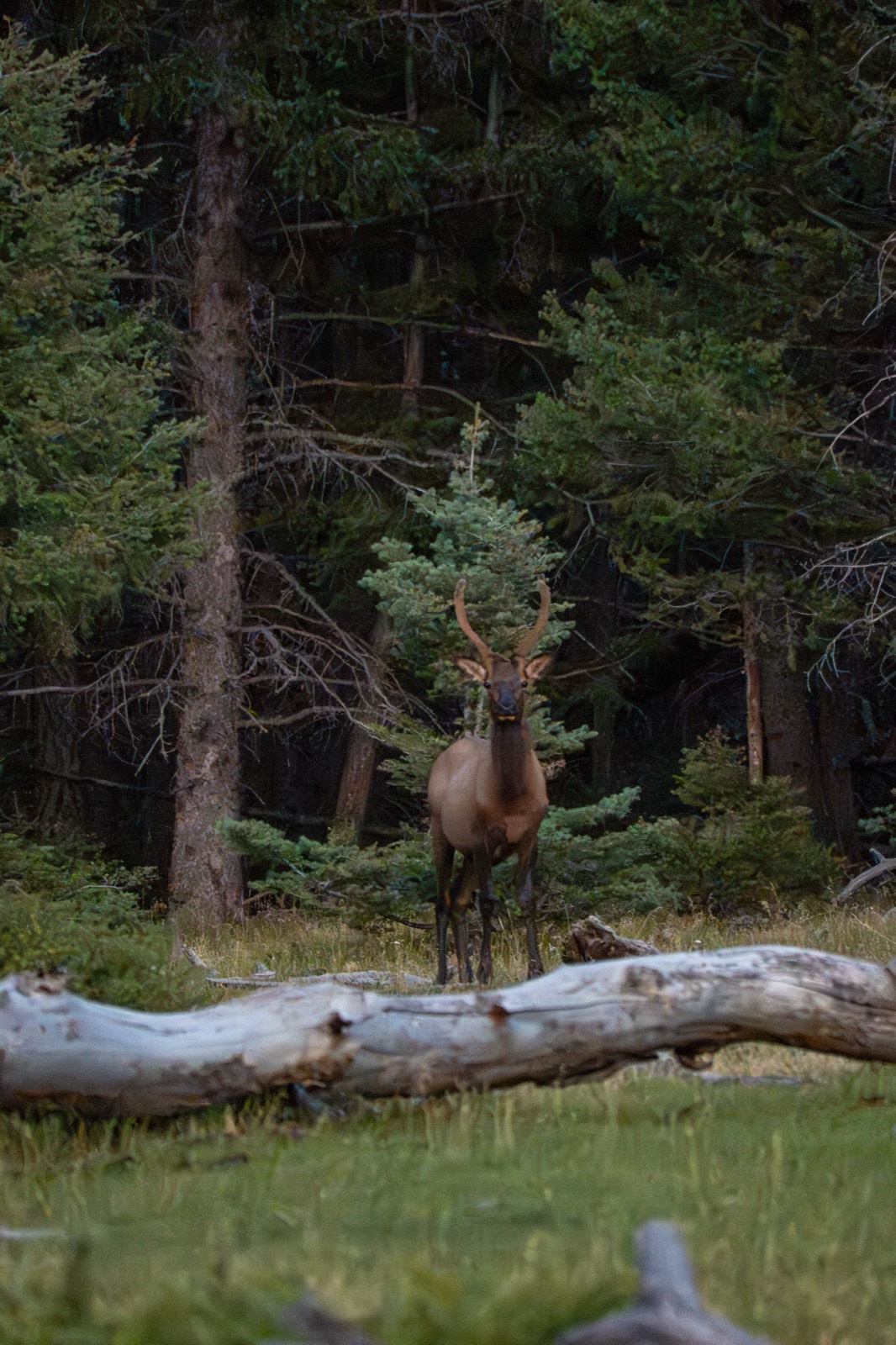
common qualityGMU 658 is a core unit of the Willapa Hills Roosevelt elk herd (north sub-herd) and WDFW ranks it second in District 17 for elk harvest, behind only 673. The 2023 survey showed a healthy, productive herd here — 29 calves and 18 bulls per 100 cows — and populations across the Willapa Hills are stable to increasing. This is one of the district's genuine elk units, not an incidental one.
- →Hunt during modern-firearm season when Manulife/Hancock opens key mainlines — that access window is when the interior elk ground becomes reachable.
- →Glass forage in fresh clearcuts and regen stands at first and last light, then work the timber edges where elk bed by day.
- →Use the dot-system roads on Green Diamond and Campbell Global ground as they open with dropping fire danger.
- →Check the WDFW Elk River Unit near Westport for public-ground opportunity.
- →Be aware treponeme-associated hoof disease is present in the Willapa herd — report limping or deformed-hoof elk.
Blacktail Deer
common opportunityColumbian blacktail are present throughout GMU 658 in the coastal timber. WDFW's top district deer units are 663, 648, 672, and 660, but 658 offers solid opportunity in the same regen-stand habitat, and its 'Good' access rating makes it easier to hunt than many neighbors. Deer numbers are stable year to year in this mild maritime climate.
- →Hunt the edges and interiors of 3- to 9-year clearcuts and replants where blacktail density is highest for food and cover.
- →Glass cuts at dawn and dusk from across-canyon vantage, then still-hunt the timber/clearcut edge as deer move to bed.
- →Scout hard — blacktails here use dense cover and visit open cuts mainly at night, dawn, and dusk.
- →Time your hardest effort to the late-October/early-November rut.
Black Bear
common opportunityBlack bears are common in the coastal timber, and WDFW lists GMU 658 among the district's regular general-season bear producers (with 642, 660, 663, 673, 681; the district's best is neighboring 648). Bears are rarely seen in the thick cover, so success leans on scouting and patience during the general fall season.
- →Scout regenerating stands for scat and bark-peeling sign, then glass berry-rich cuts at dawn and dusk.
- →Hunt the open ground so you can spot a bear before it winds you in the dense coastal cover.
- →Key on ripe berry feed in early fall before deer and elk pressure scatters bears.
- →Sit fresh sign in a productive cut rather than covering lots of ground.
Cougar
common opportunityCougars range throughout the unit following the elk and deer. Most are taken opportunistically by big-game hunters; the season is harvest-cap managed and can close mid-season.
- →Carry a tag while hunting elk and deer — cougars track the prey concentrations in the regen stands and river bottoms.
- →After any fresh snow, cut roads and landings for tracks to follow up.
- →Check hunt-area status regularly since cap-managed areas can close once the threshold is reached.
Pro tips
- →This is a real elk unit — District 17's #2 for harvest — so plan a Willapa Roosevelt elk hunt here and time it to the modern-firearm mainline openings.
- →Its 'Good' WDFW access rating beats most coastal-timber units, but you still need the right permit for the block you want (Rayonier general permit, FIA via American Forest Management, Weyerhaeuser permit/lease).
- →Learn the dot-system colors (Red/Yellow/Green/No dot) and read the signs at every gate — Green Diamond and Campbell Global change openings with fire danger.
- →Reach the DNR parcels and interior on foot across surrounding private timber when neighbors open gates after fire season.
- →Focus on 3- to 9-year clearcuts for both blacktail and bear feed.
- →Check out the expanded WDFW Elk River Unit near Westport for public ground.
Watch out for
- !Access is 'Good' by coastal standards but still governed by permits, leases, and dot systems that vary by company, season, and fire danger — confirm before you go.
- !Manulife/Hancock ground is largely non-motorized; motorized access opens mainly on select mainlines during modern-firearm season.
- !Weyerhaeuser lands here are restricted to permit and lease holders only.
- !Archery and muzzleloader hunters frequently get less (especially vehicle) access than modern-firearm hunters on the timber lands.
- !Trespass on a permit/lease area can bring prosecution and a permanent ban from the landowner — obey posted signs and dot colors.
- !Treponeme-associated hoof disease is present in the Willapa Hills elk herd; report affected animals.
- !High industrial fire danger can close both private timber and public ground early in the season.
Logistics
Base out of Aberdeen, Hoquiam, or Cosmopolis on the north side or Raymond and South Bend on the south, all along the US 101 corridor, for motels, fuel, and groceries; the WDFW Region 6 office is in Montesano (360-249-4628) for public-access questions. Most of the unit is gated private timberland, so plan on day-hunting off the mainlines rather than dispersed camping. Carry a current ownership/access map, arrange Rayonier/FIA/Weyerhaeuser permits or leases ahead of time, and expect gravel roads controlled by gates and dot signs.
Nearest towns: Aberdeen, Hoquiam, Cosmopolis, Raymond, South Bend, Westport, Montesano
Seasons & regulations
This page carries no season dates or regulations. Get current rules from the official Washington sources:
Research sources: WDFW 2023 District 17 Hunting Prospects — GMU 658 North River: 'Good' access, Willapa elk (#2 harvest, 29:100 calf / 18:100 bull), deer, bear, timber ownership and dot system · WDFW 2024 District 17 Hunting Prospects (Willapa Hills elk herd rankings, access) · WDFW Game Management Units (GMU boundaries & maps)
FAQ
- How big is GMU 658 in Washington?
- GMU 658 (North River) covers about 254 square miles, ranging from roughly 0 to 1,500 feet in elevation. Area is computed from the unit boundary polygon.
- How much public land is in GMU 658?
- Approximately 10% of the unit is public land. Primary managers: Manulife Investment Management (Hancock), Rayonier, Weyerhaeuser, Campbell Global, Green Diamond Resource, Forest Investment Associates (FIA), Grays Harbor County, Olympic Resource Management, WDNR. Always verify ownership boundaries on the ground.
- What species does the catalog list for GMU 658?
- Roosevelt Elk, Blacktail Deer, Black Bear, Cougar. For seasons, tags, and regulations, use the official Washington agency resources linked on this page — this page carries no regulatory information.
Put GMU 658 on your map.
Boundary lines, public/private ownership, topo, and offline maps for this unit — in Baseline Maps, free for 14 days.